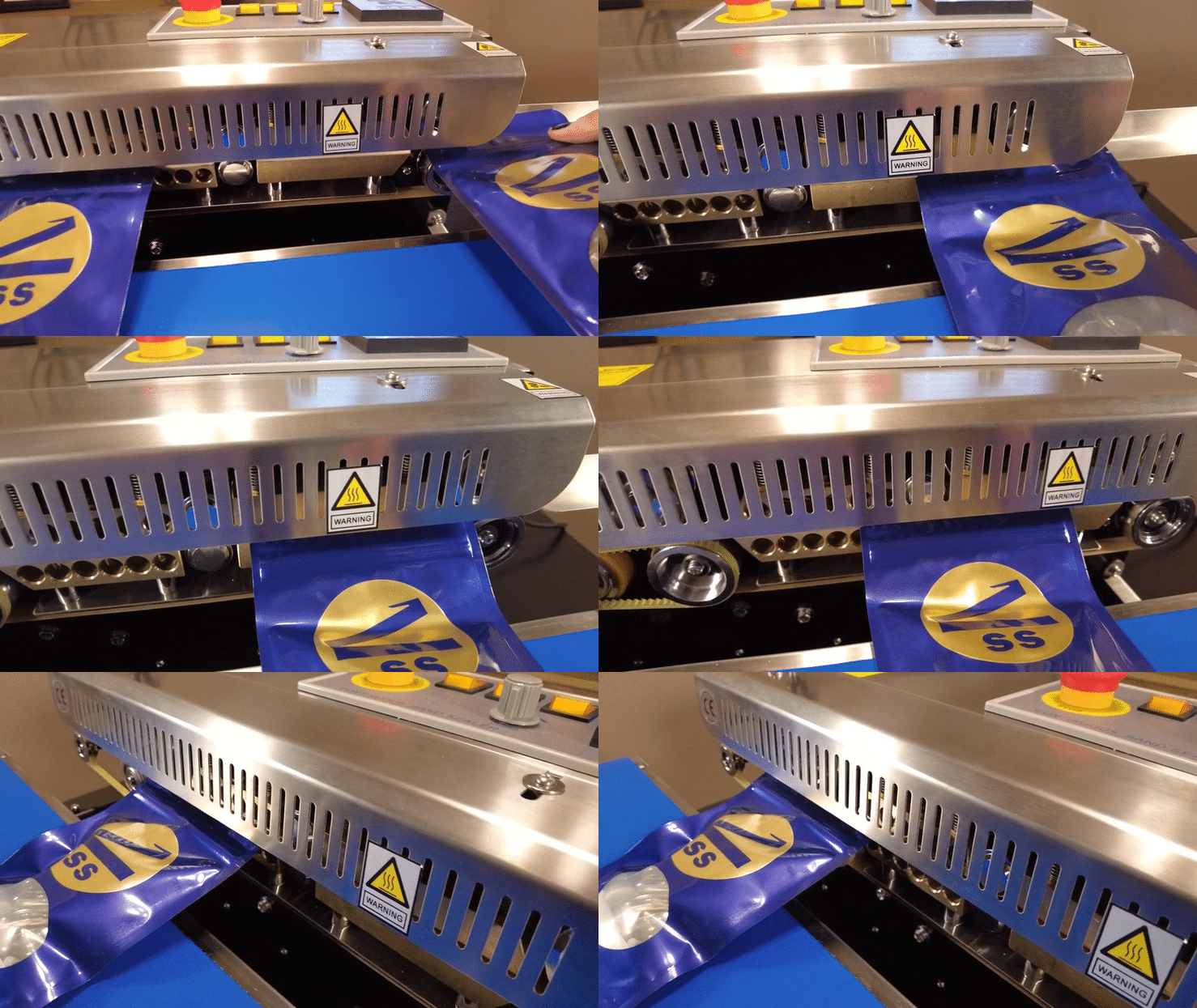
Impulse Sealer Troubleshooting 101

Hand, foot, and auto impulse sealers all work in a similar way — so when something goes wrong, the fix usually comes down to one of a handful of parts: the heating element, PTFE cover and adhesive, microswitch, mounting springs, or timer. This guide walks through the most common causes in order, so you can troubleshoot your sealer before assuming you need a replacement.

Q: I bought a sealer and now it isn’t working. Can you help me?

A: Of course! We’re the sealer experts, and most issues turn out to be simple fixes. All you need is a screwdriver, an unplugged machine, and a few minutes to run through our quick troubleshooting checklist below.


Before You Start

  • Always unplug the unit before opening it up
  • Have a screwdriver handy — most hand and impulse sealers open with just a few screws
  • Work through the checks below in order; they cover the most common causes first

The 4 Point Sealer Checklist
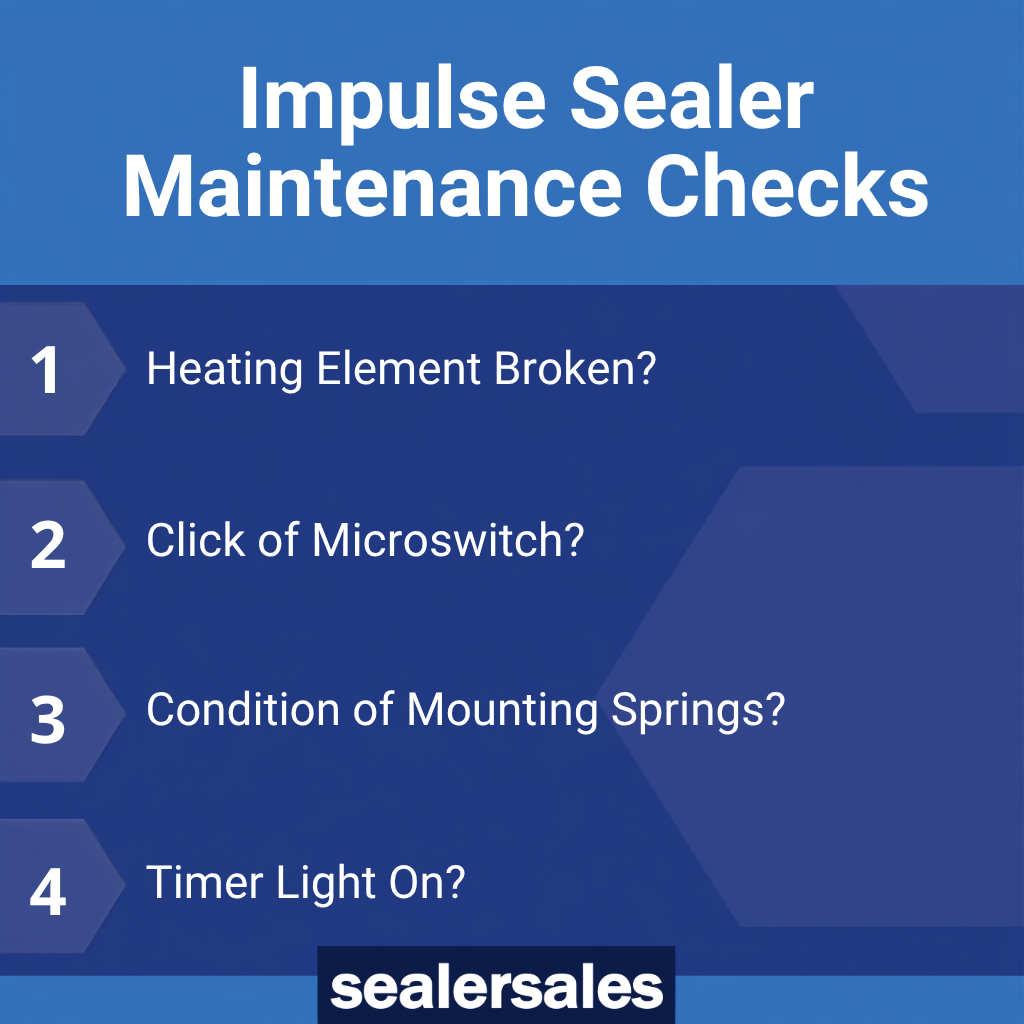
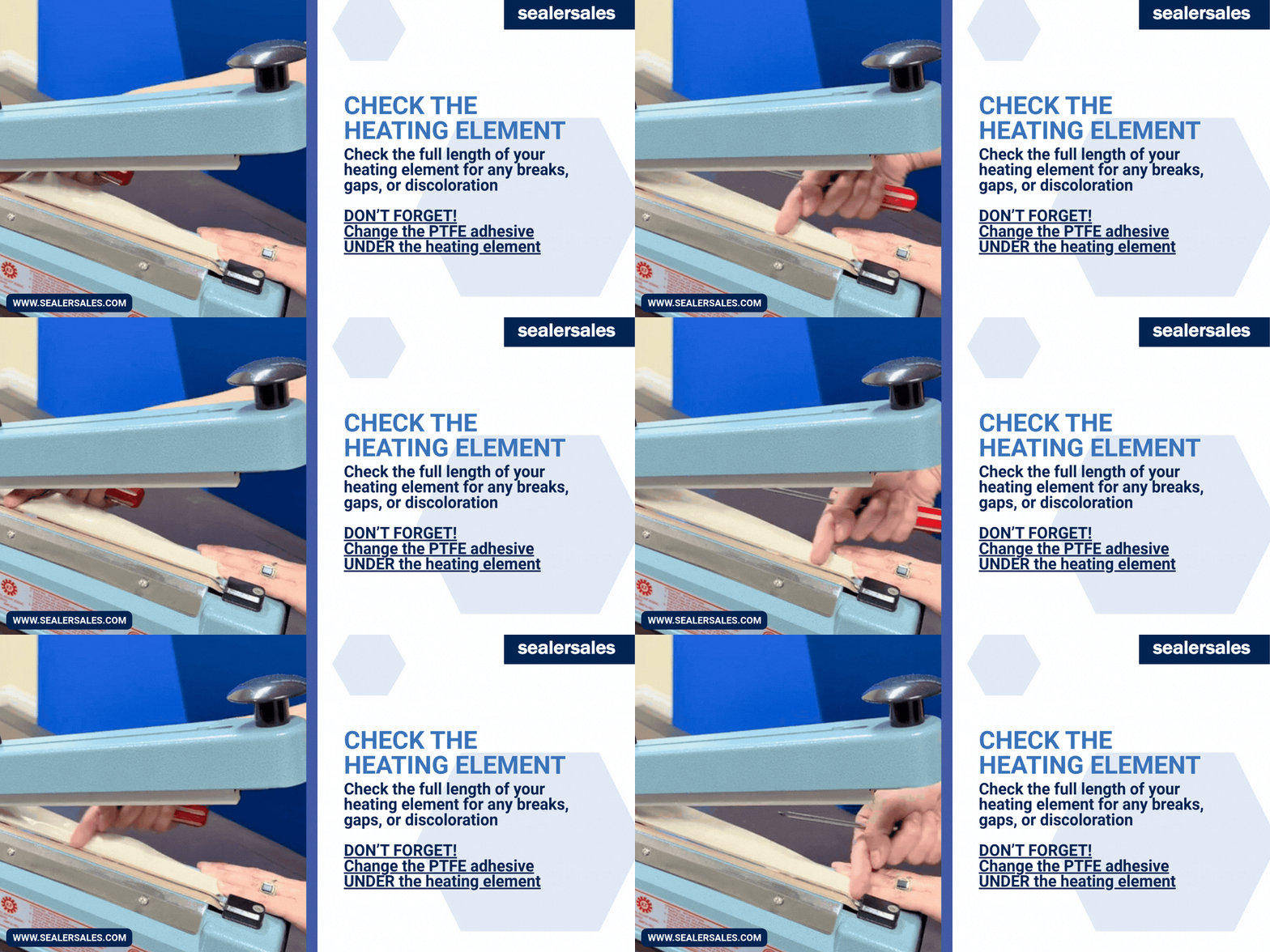
1. Is the heating element or wire broken?
This is the wire (flat or round) that heats up to seal or cut the bag/film. Remove the PTFE cover and check that the wire isn’t discolored, bent, or broken, and that it runs fully across the sealer.

Whenever you replace the element, always replace the PTFE adhesive underneath it too — this thin adhesive-backed strip is the barrier between the metal heating element and the sealer’s metal body. If it burns through, the element can arc against the body, which breaks the element again and can damage the timer as well. Replacement kits include the element, PTFE cover, and PTFE adhesive together so you’re never missing a piece. We carry replacement kits for all our sealers.
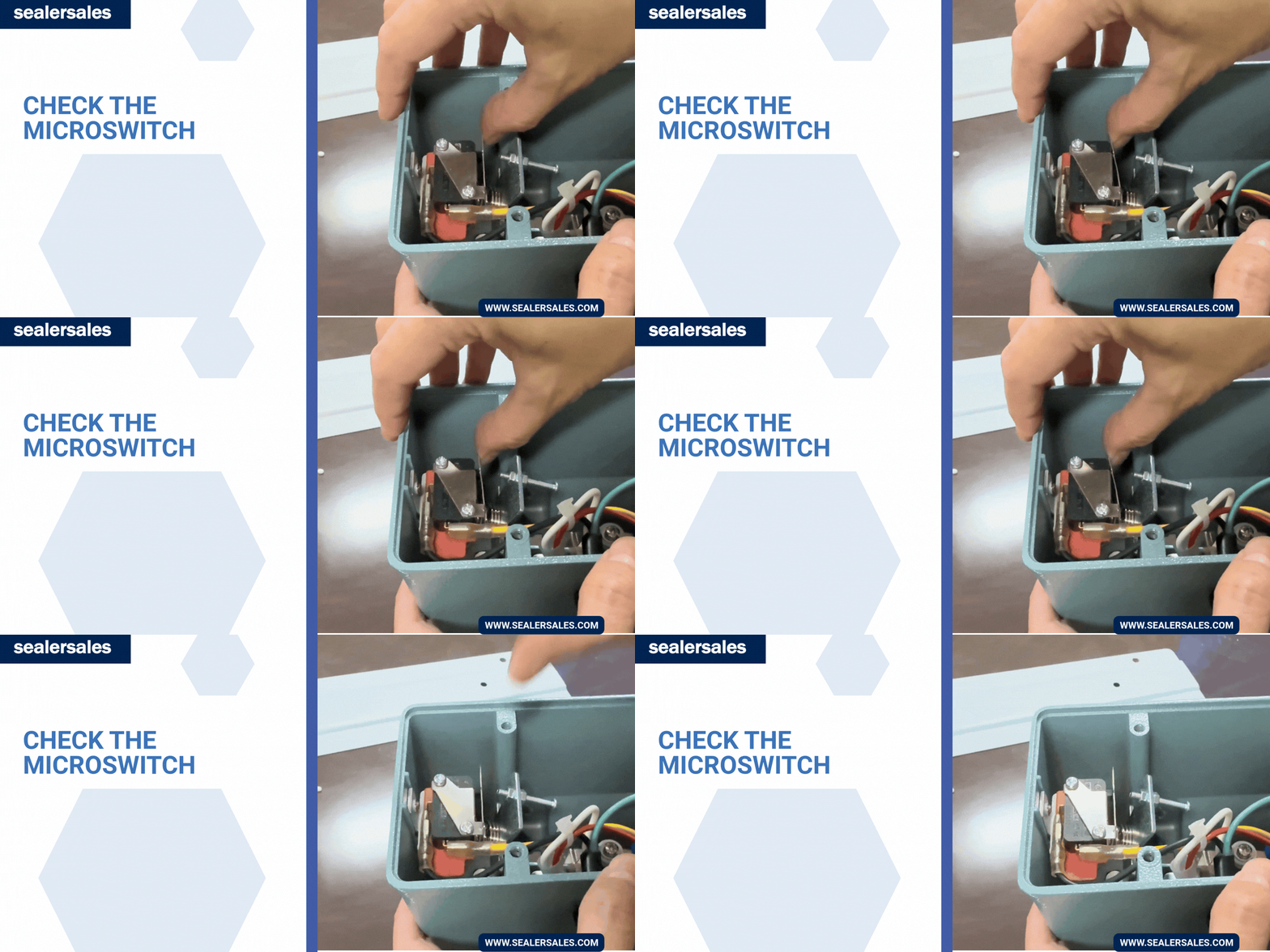
2. Do you hear the microswitch “click”?
The microswitch is what allows electricity to reach the heating element. It can shift out of alignment during shipping and need a simple adjustment, and the fix depends on your sealer type
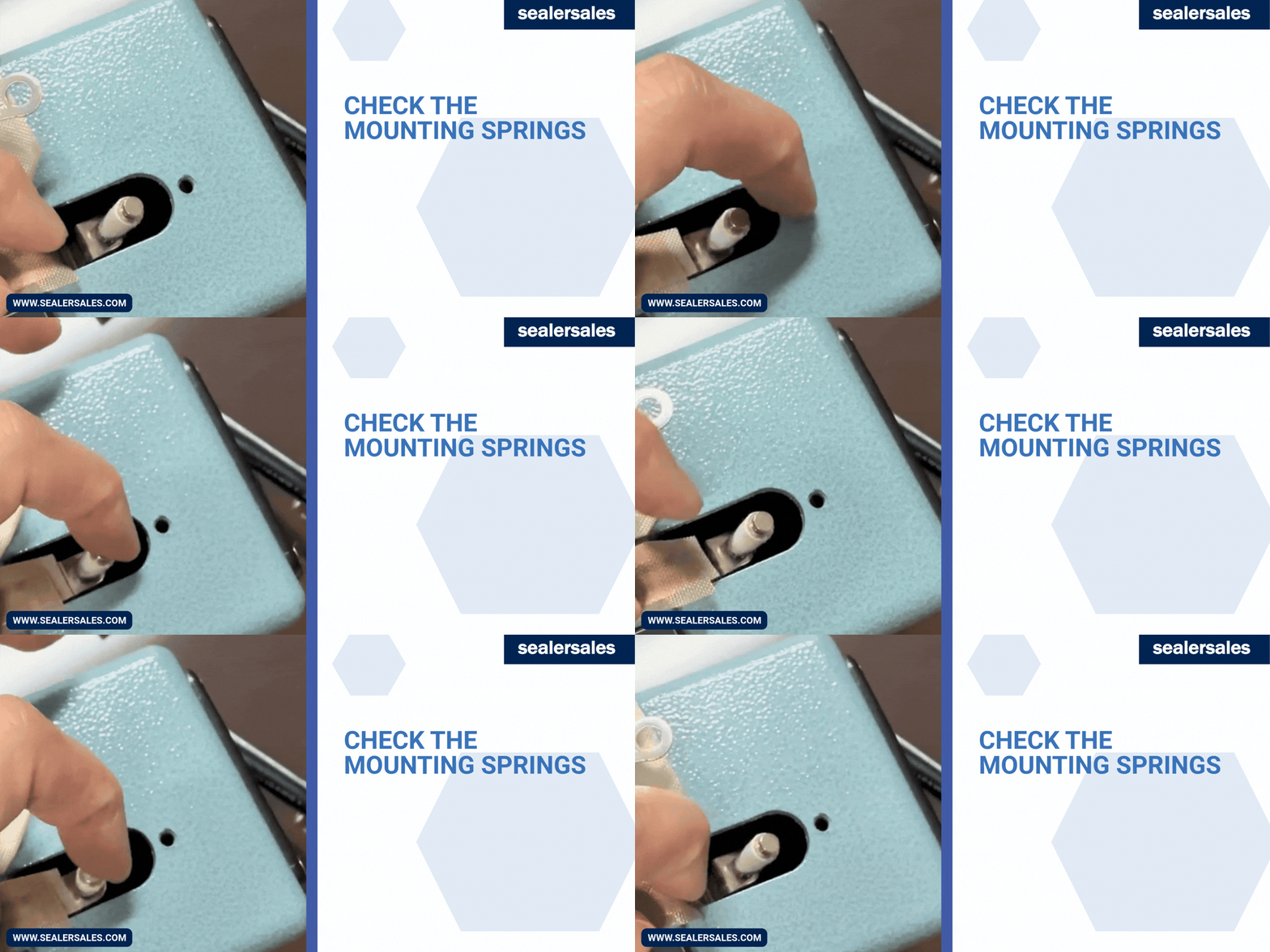
3. Are the mounting springs intact?
The springs hold the heating element in place on both ends. Make sure they’re not broken, rusted, or worn — a damaged spring will prevent the element from conducting heat properly. Replace if needed. Mounting springs can be purchased here.

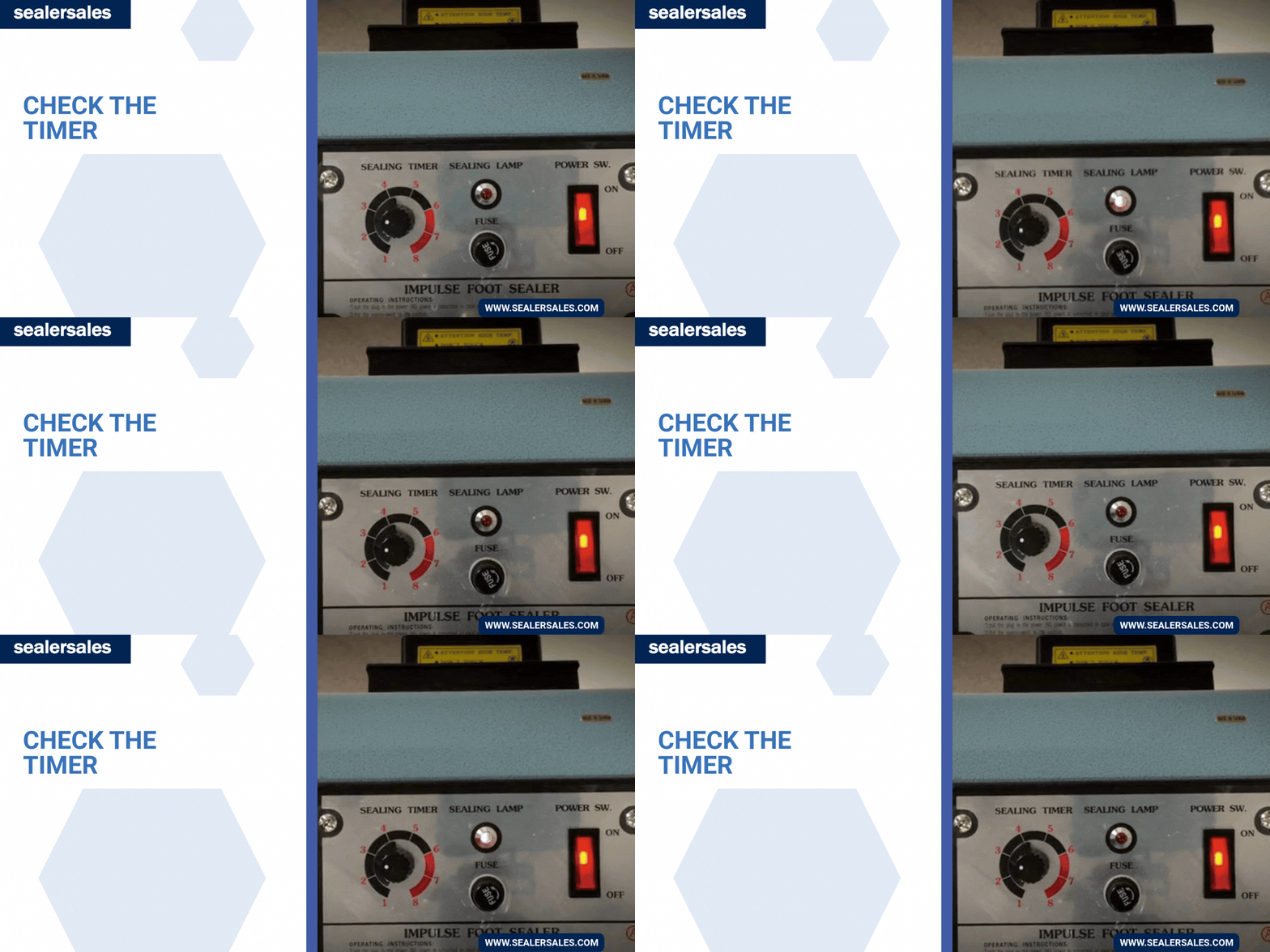
4. Does the timer light come on?
The timer light should come on briefly when the seal bar meets the base. If it doesn’t, check for loose wiring — if wiring looks fine, the timer likely needs replacing. Replacement timers can be purchased here.

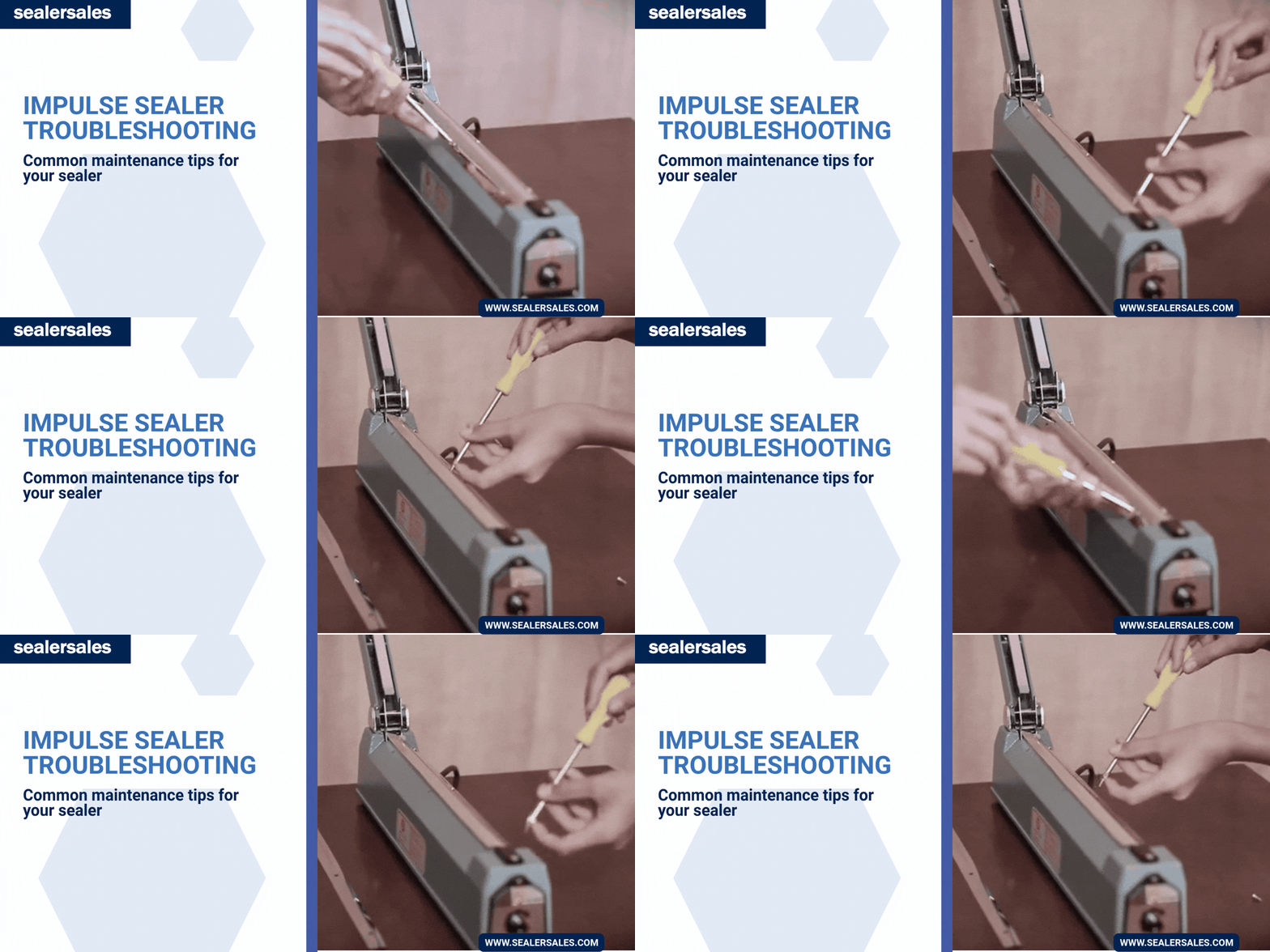
Watch: How to Change Your Replacement Kit

We recommend changing your element, PTFE adhesive, and PTFE cover on a regular basis as part of routine maintenance — not just when something breaks.


Features to Check for Weak or Inconsistent Seals

Check below

  • Silicone rubber worn or missing — the milky-white rubber strip on the sealer arm needs to be intact for a clean seal
  • PTFE strip worn out — residue buildup on the PTFE can prevent a high quality seal; wipe down with silicone spray on a cooled (not hot) unit, never spray directly onto the machine
  • Timer settings incorrect — try different timer settings
  • Congeal (Dwell) time too low — congeal means to cool under pressure, and skipping it is one of the most common causes of a seal that looks fine but opens easily. Hold the sealing arm down for a couple of seconds after the timer light goes off before releasing. This lets the seal set and cool properly, and also extends the life of your heating element. For auto impulse sealers, set the congeal (cooling) time to at least 2x the heat setting. Skipping or shortening this to boost packages-per-minute is the leading cause of premature element and PC board failure

In most cases, a sealer that stops working isn’t broken for good — it just needs one part checked or replaced. Running through the heating element, PTFE adhesive, microswitch, mounting springs, and timer in order will catch the vast majority of issues, and regular maintenance (fresh PTFE, proper congeal time) goes a long way toward preventing them in the first place.

We carry a wide variety of spare parts that will help you repair your sealer.

Reach out to our customer service team or your authorized Sealer Sales distributor for more information — and if you’re not sure what’s wrong, send us a photo or model number at contact@sealersales.com and we’ll help you figure it out.
Vacuum Sealing 101

Vacuum Sealing 101
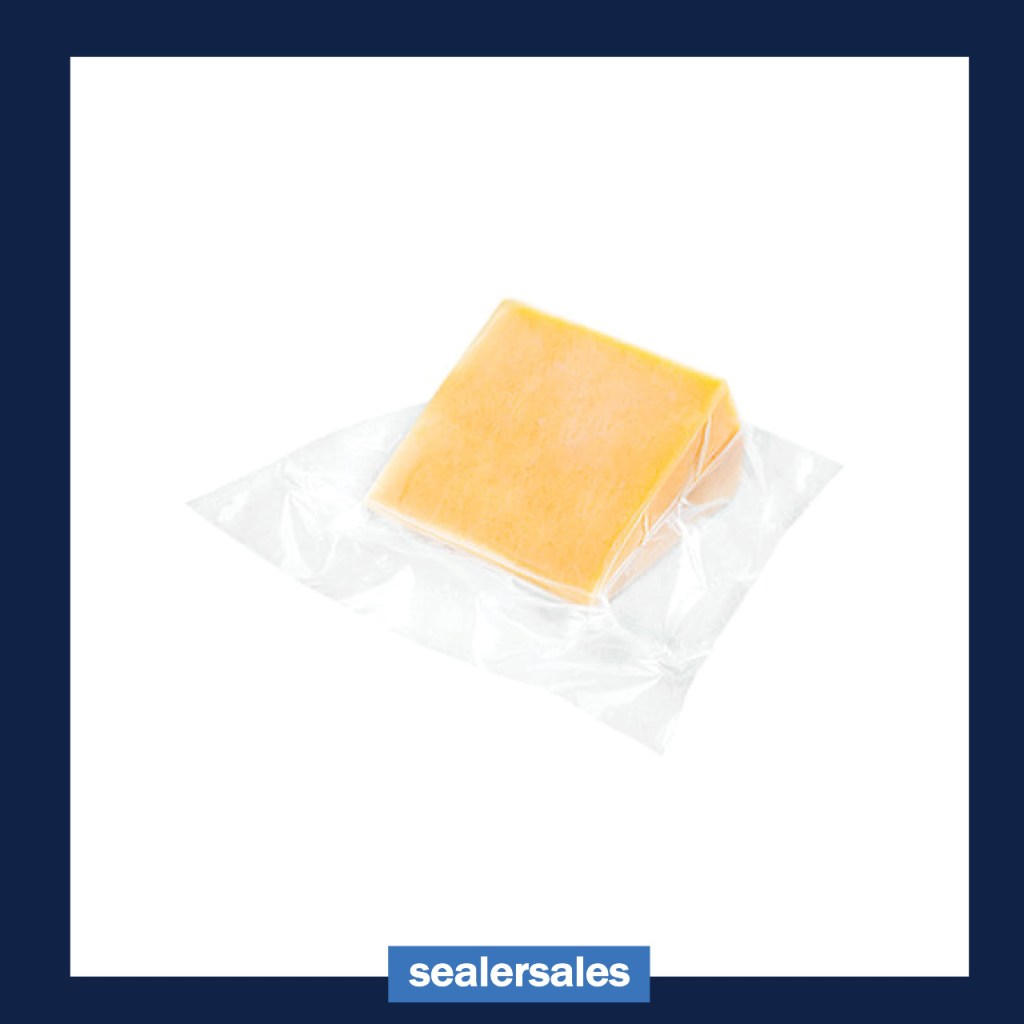
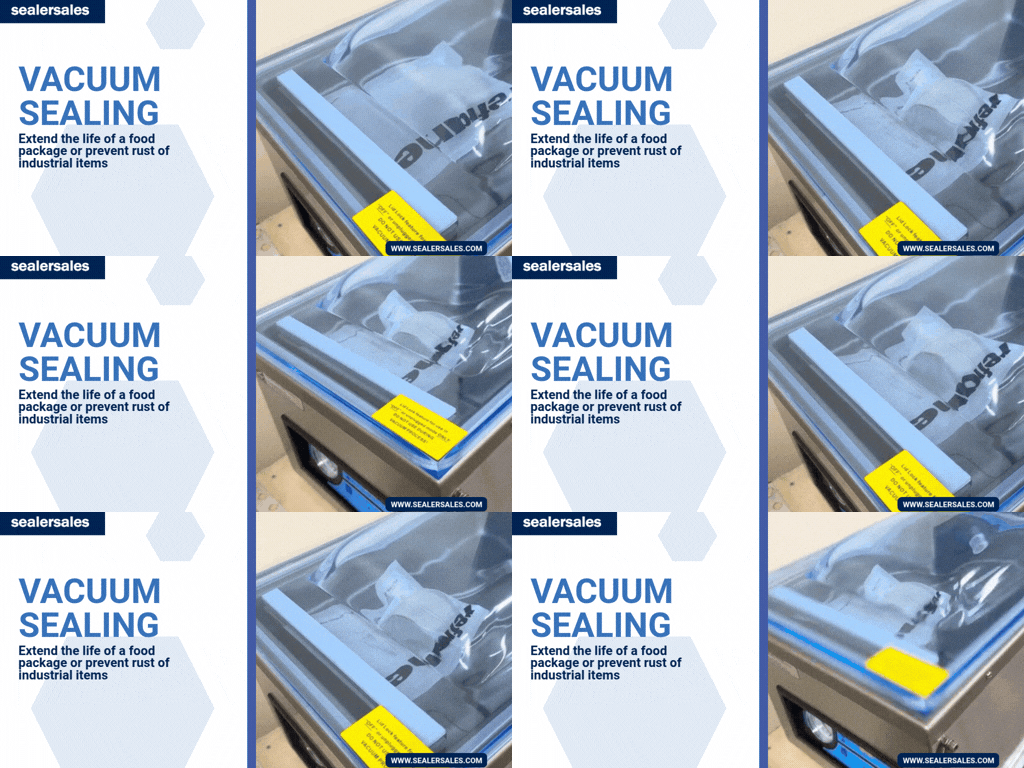
Vacuum packaging is the process of extracting air around a product and then sealing the product in an impermeable package.  It protects the product from oxidation, spoilage and/or corrosion.  Vacuum packaging is commonly used in food, medical and industrial applications.

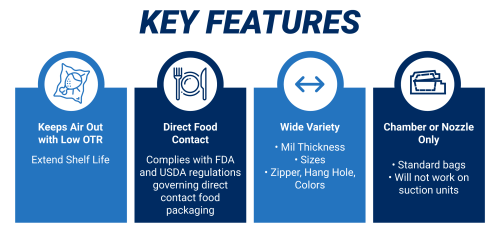
Barrier bags are a must.  Barrier bags are used for vacuum sealing because polyethylene or polypropylene bags are both porous and cannot hold the vacuum for long term storage.
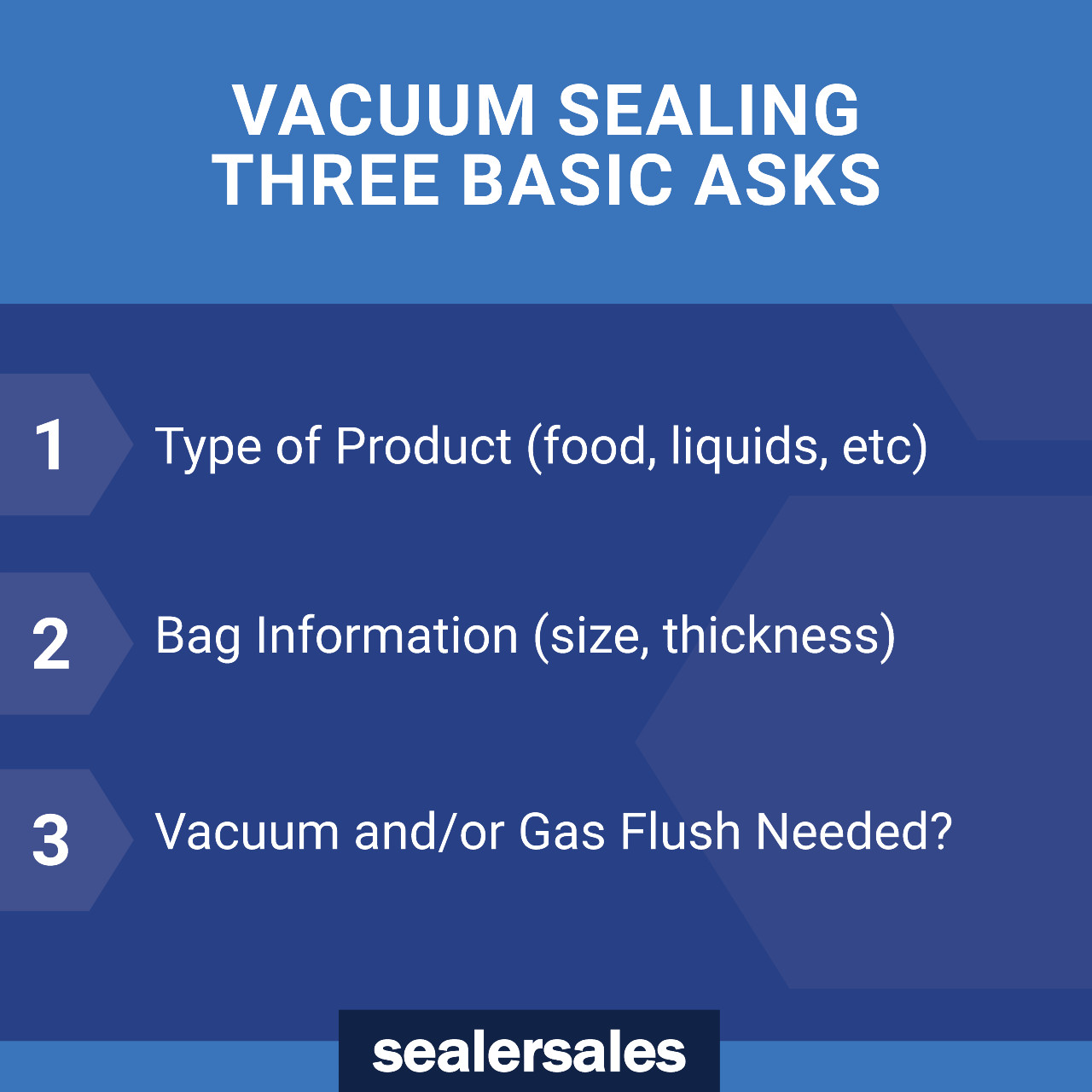
When choosing a vacuum sealer, we will need to know what you are vacuum sealing (food, liquids, electronics, etc) and the type of packaging material you are using (material type, size and thickness).  These questions are important to answer to make sure the correct sealer is chosen.

Types of Vacuum Sealers 
There are two types of vacuum sealers – nozzle vs. chamber

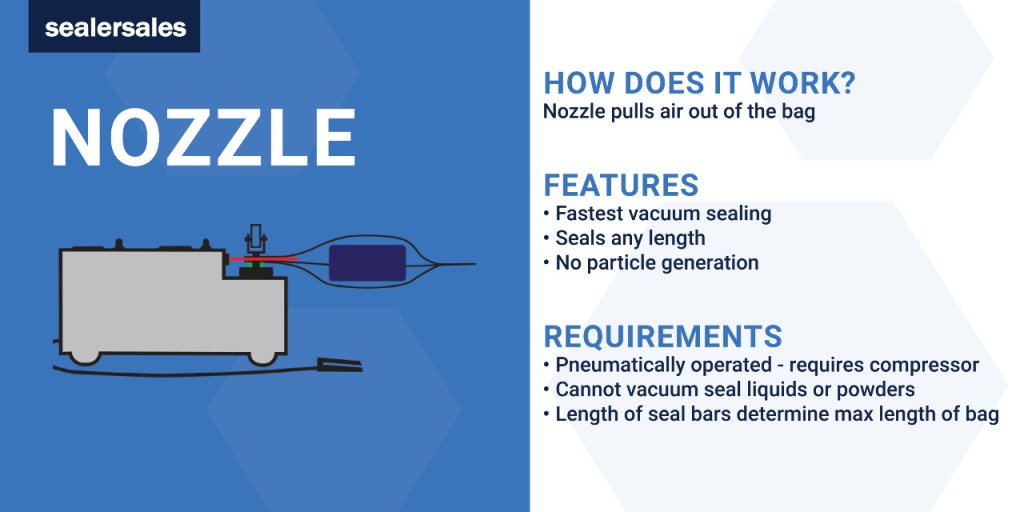
  • Nozzle – Fastest way to vacuum seal
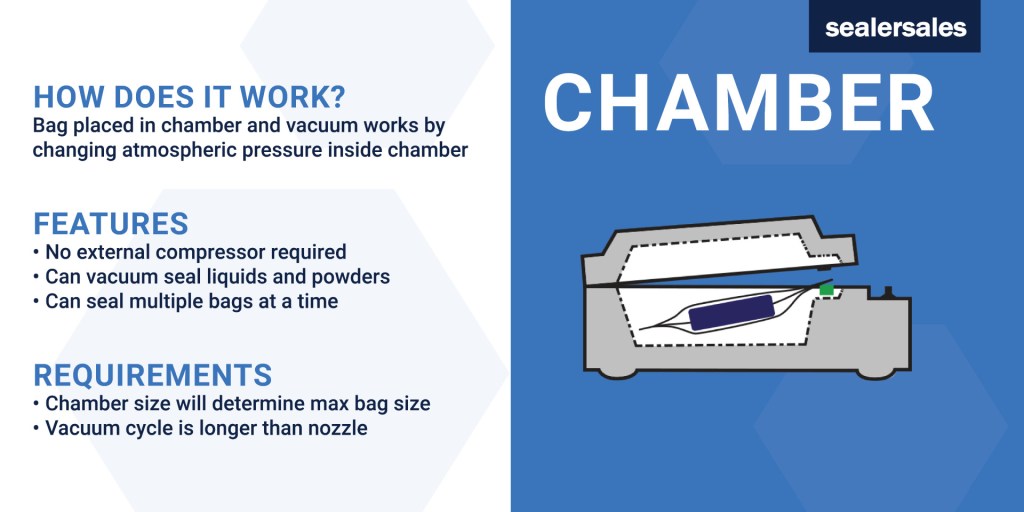
  • Chamber – Most versatile type vacuum sealing almost anything including liquids and powders

Nozzle Vacuum Sealers
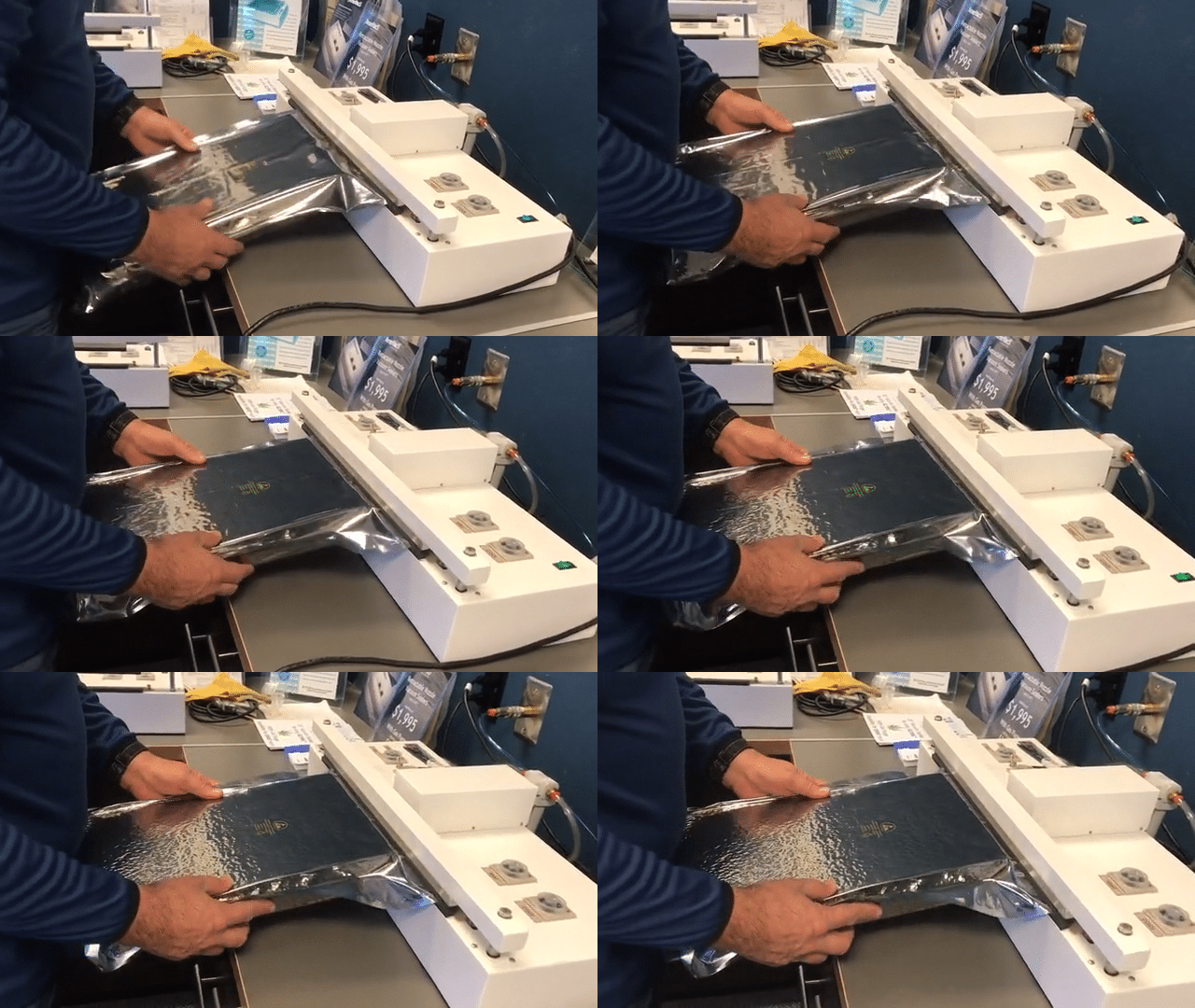
In a nozzle vacuum sealer, air is extracted by means of a retractable nozzle that is placed in between the vacuum bag.  Bag conforms around the product as air is extracted.

Features

  • Vacuum sealing tends to be fast and efficient
  • Low noise, non particle generating compressed air driven pump ideal for cleanrooms
  • Seals any bag length
  • Gas flush options available

Requirements

  • Pneumatically operated so will require an external compressor to operate (we do carry some units with self-contained compressor for a plug and go option)
  • Cannot vacuum seal liquids or powders
  • Length of seal bars will determine the maximum length of the bag
Chamber Vacuum Sealers
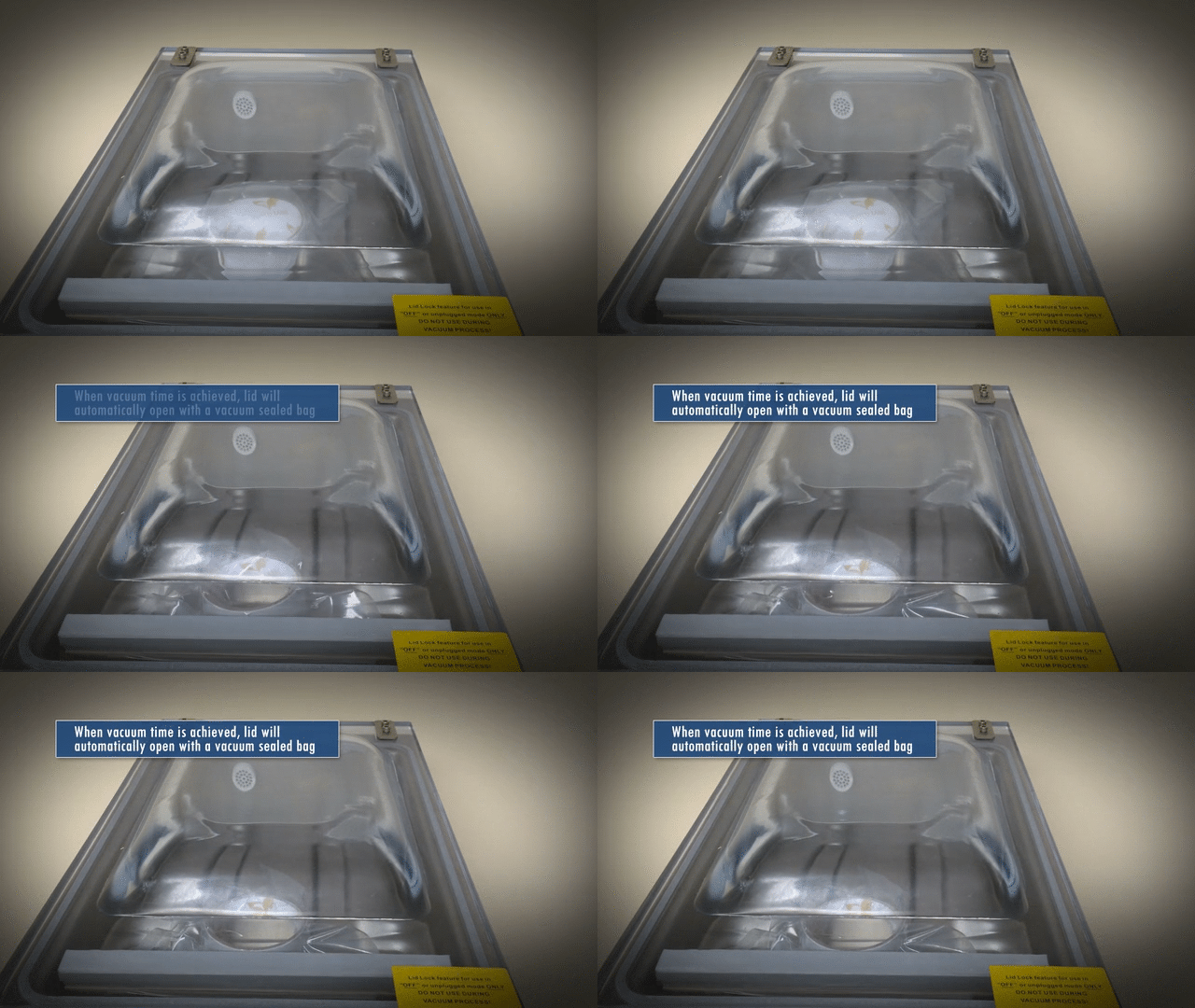
In a chamber vacuum sealer, bags are placed in a chamber to initiate the vacuum sealing operation by changing the atmospheric pressure inside the chamber. Chambers can vacuum seal almost any product include liquids and powders.  Chambers do not need an external compressor to operate.  For a more in-depth explanation on chambers, click here.
Features
No external compressor required
Can vacuum seal liquids and powders
Can seal multiple bags at a time
Gas flush options available
Requirements
Chamber size will determine the max bag size
Vacuum cycle tends to be longer than in nozzle vacuum sealers

If you pull a vacuum with a poly bag, not a barrier bag, the poly bag will allow oxygen back into the bag defeating the purpose of the vacuum sealer.  In order for the bag to stay vacuumed, the bag must be a vacuum bag.

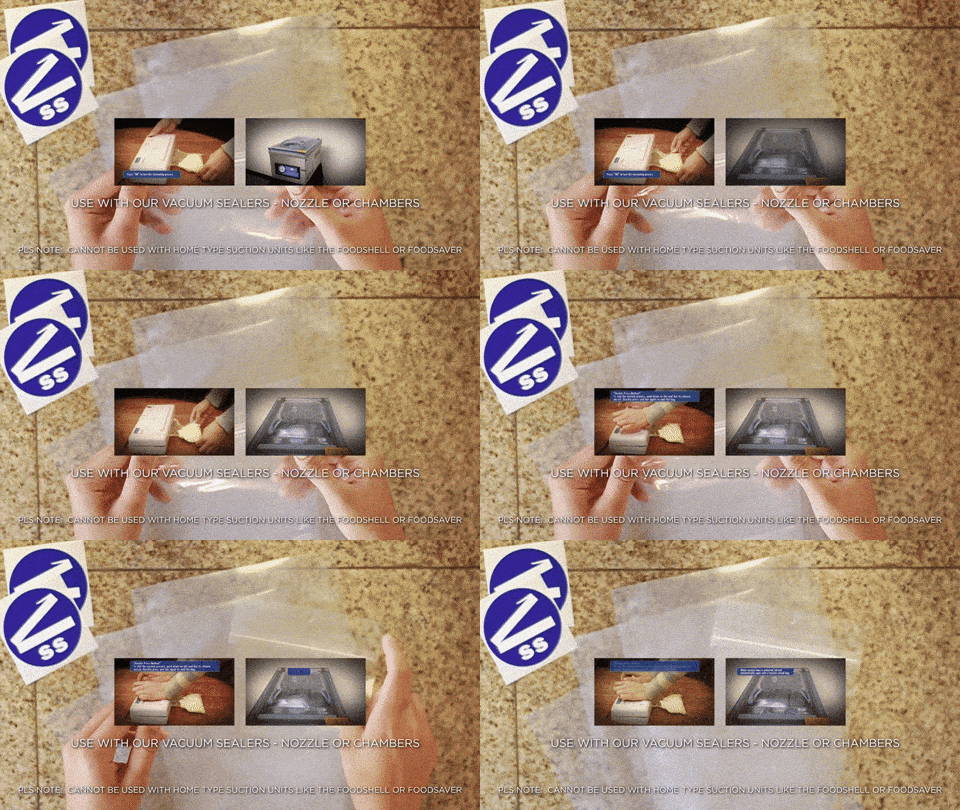
We carry a wide variety of vacuum bags to suit your application

  • Our stock bags range from 4″ x 6″ to 24″ x 36″
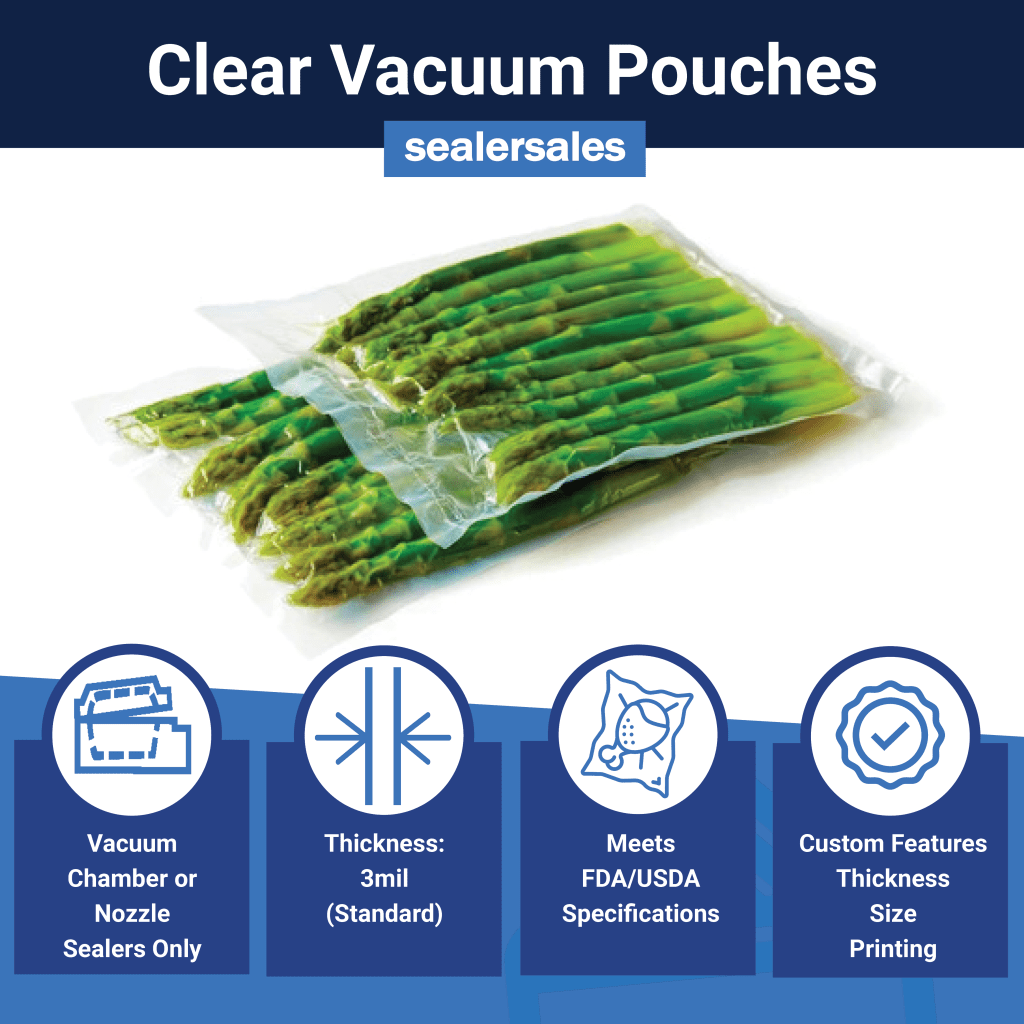
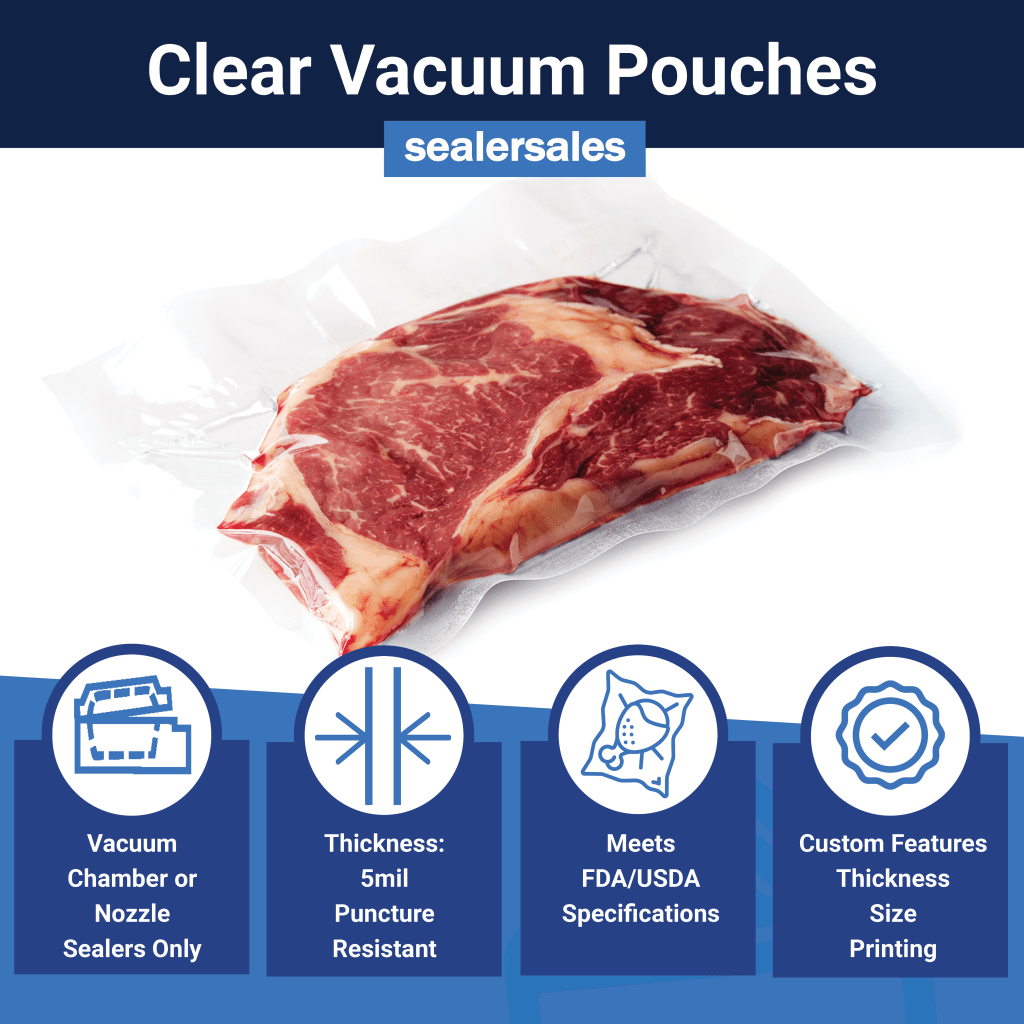
  • Various thicknesses available:  3mil, 4mil, 5mil
  • Different color options such as clear, clear/gold or clear/black
  • Custom sizes, material types and printing available

Reach out to our amazing customer service team or your authorized Sealer Sales distributor for more information.

Bag Sealing 101

Bag Sealing 101
Whether you’re packing coffee, snacks, industrial parts or medical supplies, a bag sealer (heat sealer) is one of the most essential tools in the packaging world.  But with so many models and options, it can be confusing to figure out which one is right for your application.   This quick guide will help you find the right sealer.

Keep products fresh and protected

Seal bags in seconds – ideal for small and large volumes

Creates clean uniform seals to elevate your packaging

Reduces waste and extend shelf life

What is a Bag Sealer?
 A bag sealer is a machine that uses heat and pressure to close and seal flexible packaging – like poly bags, pouches and or laminated films. The heating element warms up (either instantly or continuously) and seals the inner layer of the bag When pressed together under pressure, the two sides fuse After a short cooling period, the seal is secure, airtight and tamper-evident

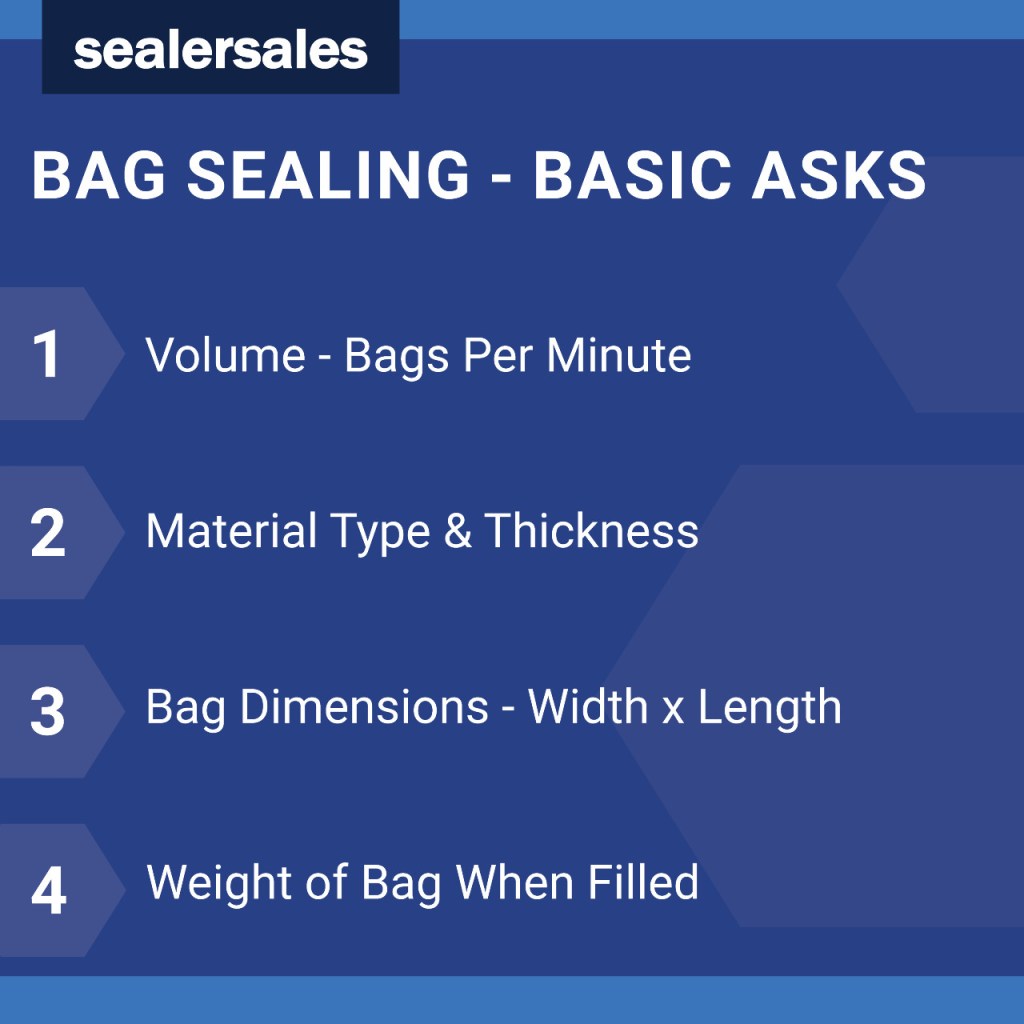
When choosing a bag sealer, focus on matching your packaging material, material size and desired production quantity. These questions are important to answer to make sure the correct sealer is chosen.

Types of Sealers 
There are two types of sealers – impulse vs. direct heat

  • Impulse – Ideal for standard poly bags (PE, PP)
  • Direct Heat / Constant Heat Sealer – Ideal for thicker harder to seal materials like foil and coated bags

Impulse Heat Sealers
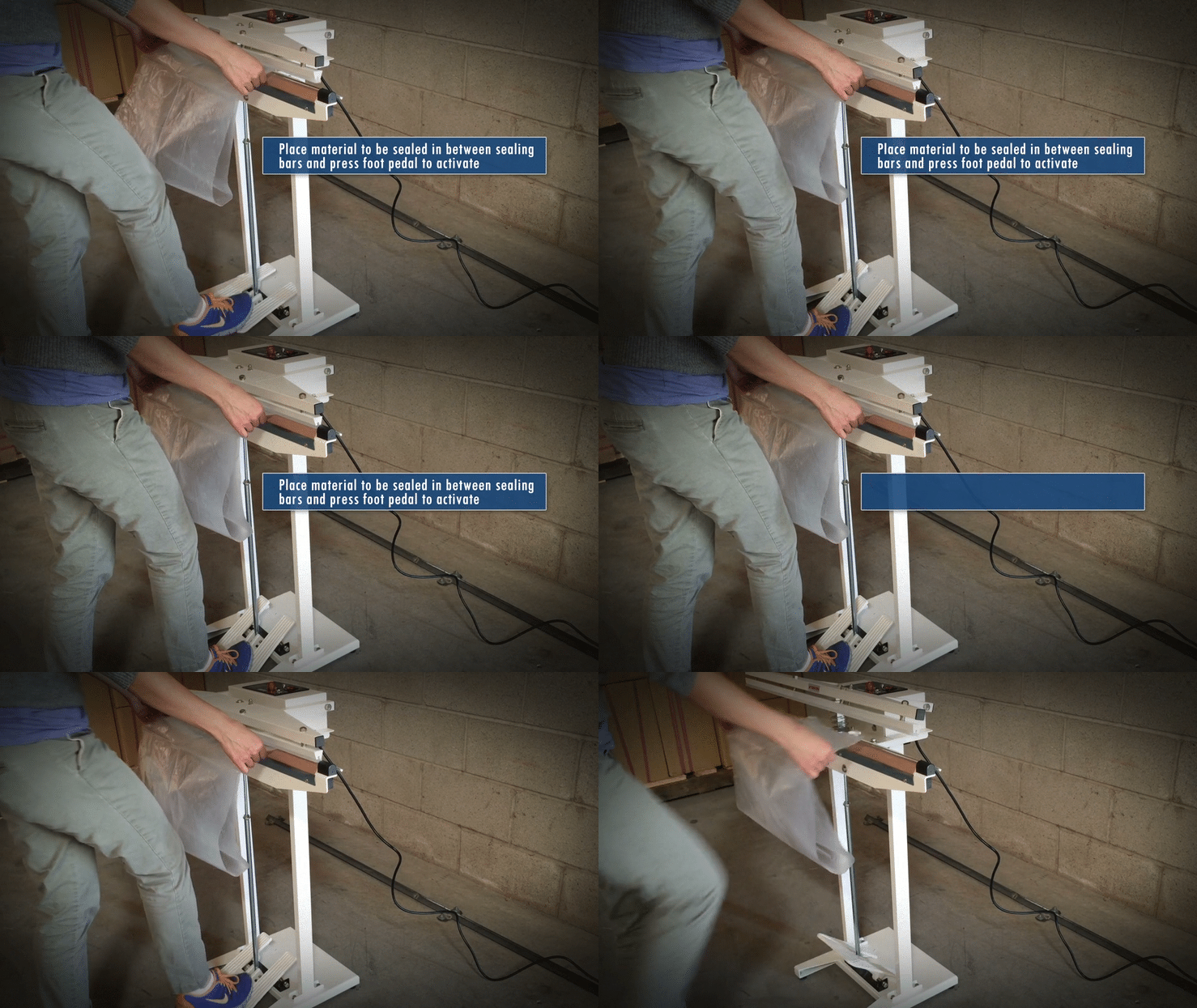
Impulse sealers are ideal for every day sealing.  The units require no warm-up time. Impulse sealers only use power when the microswitch is activated Ideal for every day poly bags (polyethylene or polypropylene) Seal widths:  Round (Shrink Wrapping), 2mm, 5mm, 10mm Require regular maintenance

Direct Heat Sealers
Direct heat sealers maintain constant heat in both jaws. Uses power as long as machine is turned on Better heat penetration for thicker materials such as gusseted bags Seal widths:  8mm, 10mm, 15mm, 20mm CANNOT seal polyethylene 

Type of Impulse Heat Sealers

Type of Direct Heat Sealers

Choosing the right sealers isn’t just about the machine – it’s about matching your packaging needs with the right sealing method.  The right sealer saves time and ensures a strong secure package every time.

Carton Sealing 101

What is Carton Sealing?
Carton sealers automatically place adhesive tape to the top and bottom of your box simultaneously.  The operator simply folds the flaps and feeds the box into the machine – no need for time consuming hand sealing.  Our carton sealers are durable, cost-effective and designed to deliver consistent professional results. 

Carton sealers are a smart investment for any end-of-line packaging process, offering measurable savings in both labor and materials by: 

  • Improving appearance of finished packages
  • Increasing throughput 
  • Reducing manual labor costs 
  • Eliminating inefficiency of double-taping

Why Use a Carton Sealer?
Our most basic carton sealer retails for less than $3,000 so a carton sealer can easily be justifiable with less than 100 boxes/day.

We offer a full range of machines tailored to your needs.  Our knowledgeable distributors can help you choose the best fit based on:  

  • Box sizes (L x W x H)?
  • Box weights
  • Manual vs. random operation
    (random automatically adjust to box size)
  • Tape width
    (2″ is standard, 3″ is also available)

How to Seal Your Carton?
A complete carton sealing set up includes:

  • Box – Make note of your box dimensions and weight
  • Sealer – A carton sealer reduces tape waste and increases consistency
  • Tape – We offer high performance acrylic as well as hot melt

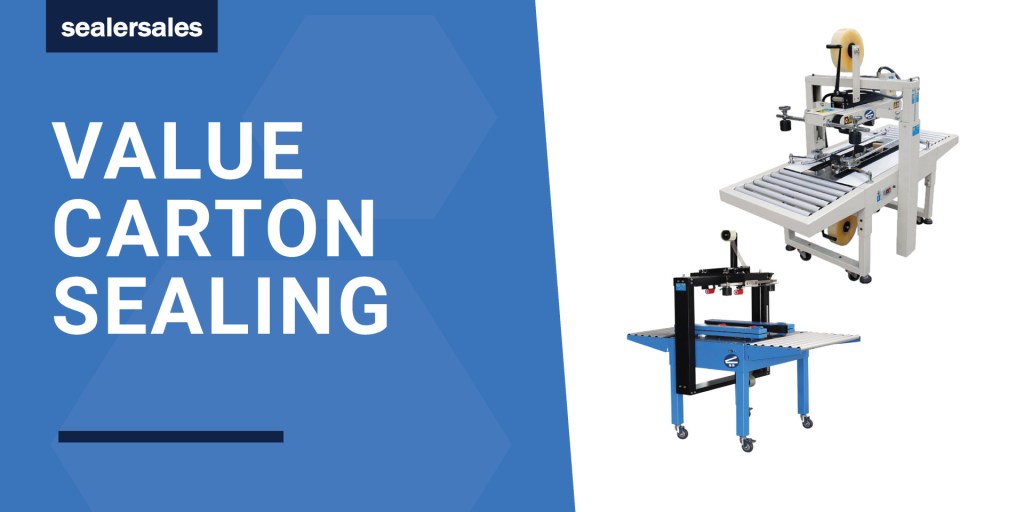
Value Carton Sealers
Our value carton sealers are ideal for sealing 15 boxes/minute. These units are easy to use and true plug-and-play systems that come standard with infeed/exit conveyors and locking casters. They’re a great solution for improving efficiency without breaking the budget.

Interchangeable Tape Head Carton Sealers
Built by the trusted BestPack, these heavy duty machines offer high speed sealing – up to 40 cartons/minute.  With over 150+ models available, including semi-automatic and fully automatic options, these sealers feature interchangeable tape heads that simplify maintenance and minimize downtime.  Ideal for operations with demanding throughput requirements.  

Not sure where to start?  Fill out our  carton sealer survey and we can help you find the best fit.

Carton Sealing Tape
We stock high quality tape designed for secure, tamper-resistant seals.  Choose from:  

  • Water Based Acrylic – great for general purpose sealing
  • BG High Tack – an excellent alternative to Hot Melt
  • Hot Melt – for increased tack and sheer

Come Visit Us at Pack Expo 2025

Join Sealer Sales at PACK EXPO Las Vegas 2025

Register for free using our comp code: 62V76  at https://pelv2025.nvytes.co/invite25/62V76.html

Discover game-changing solutions and unleash innovation when you attend PACK EXPO Las Vegas. Explore all the latest advances in packaging and processing from 2,300 exhibitors and uncover new frontiers in productivity, efficiency, sustainability, brand impact and more. No other show this year comes close

Shrink Wrapping 101

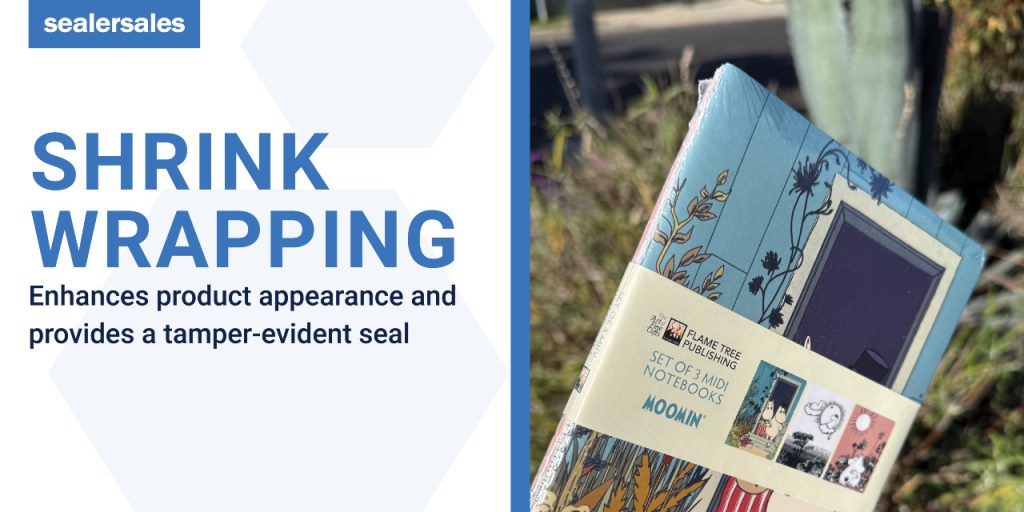
Shrink wrapping enhances product appearance, keeps items clean and provides a tamper evident seal – .  It’s also commonly used to bundle cartons, cans and other goods for bulk sales.

What is Shrink Wrapping?
Shrink wrapping is an efficient and cost-effective method widely used in industries like food, beverage and pharmaceuticals.  The process involves wrapping a product in shrink film and applying heat – shrink tunnel or heat gun – to create a tight secure fit. 

How to Shrink Wrap a Product?
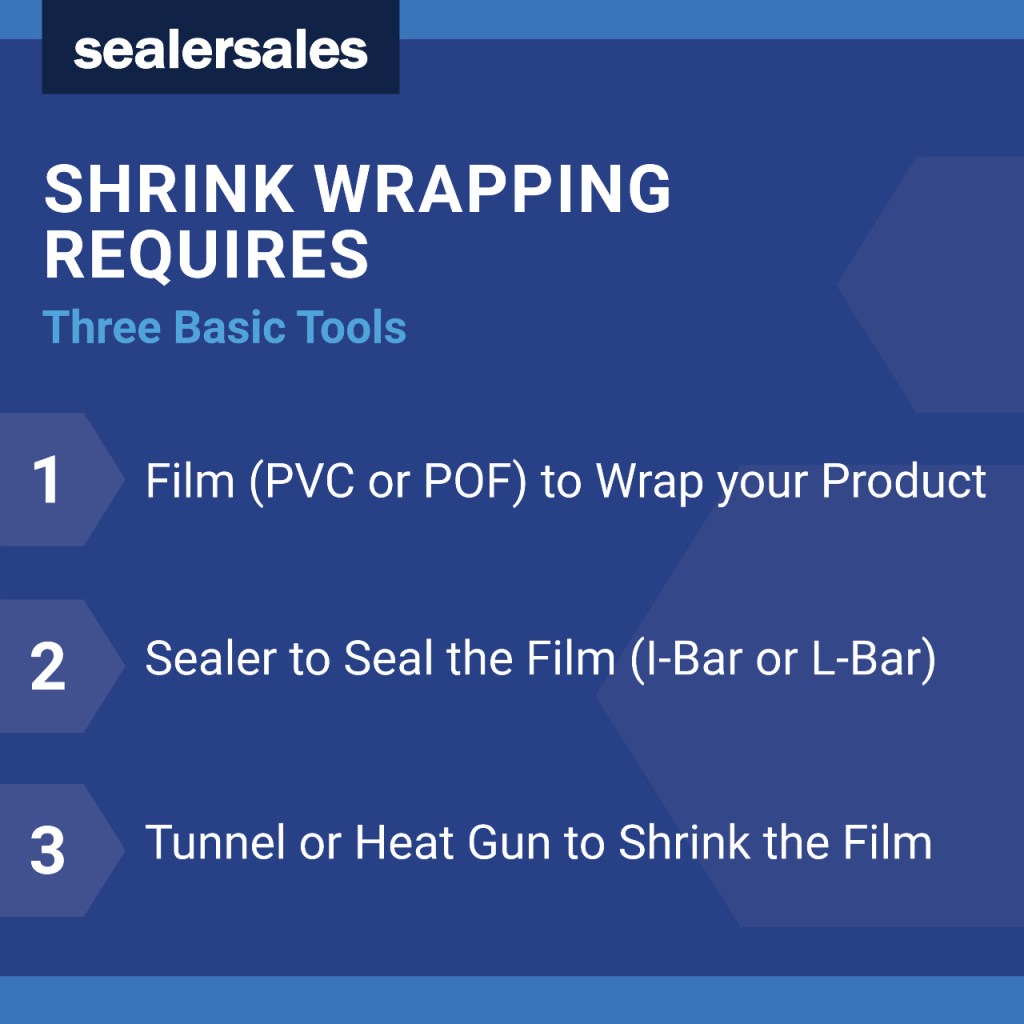
Shrink wrapping requires three essential components

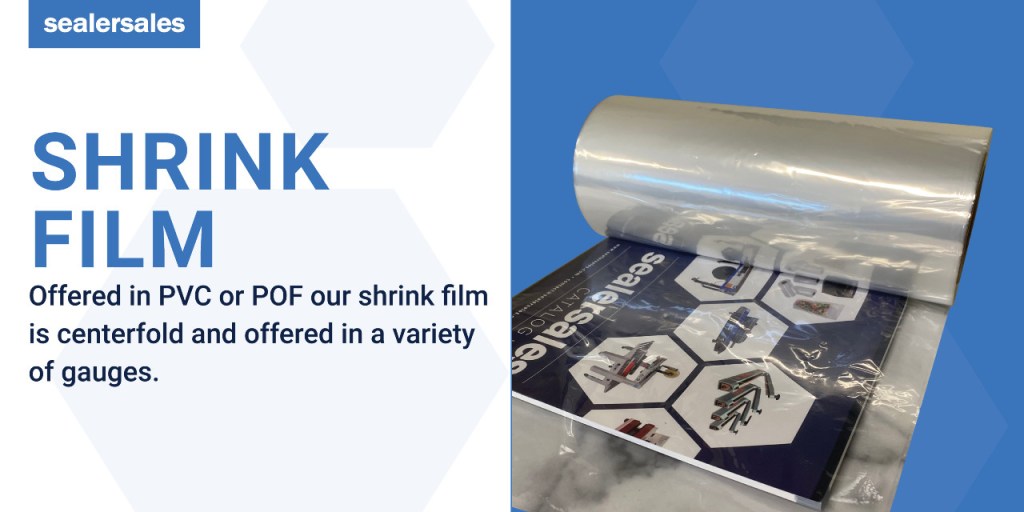
  • Shrink Film – PVC or POF film to wrap around your product
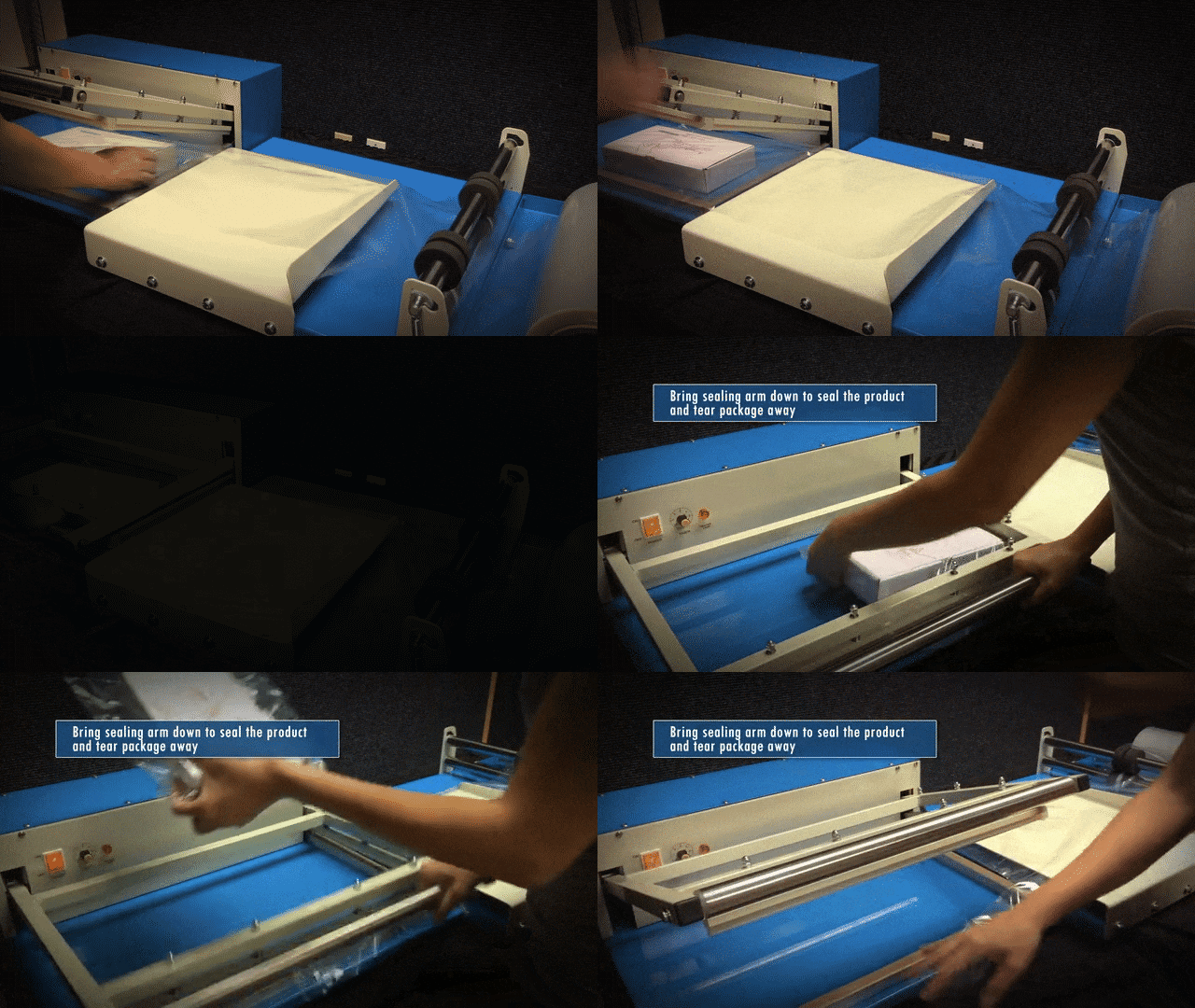
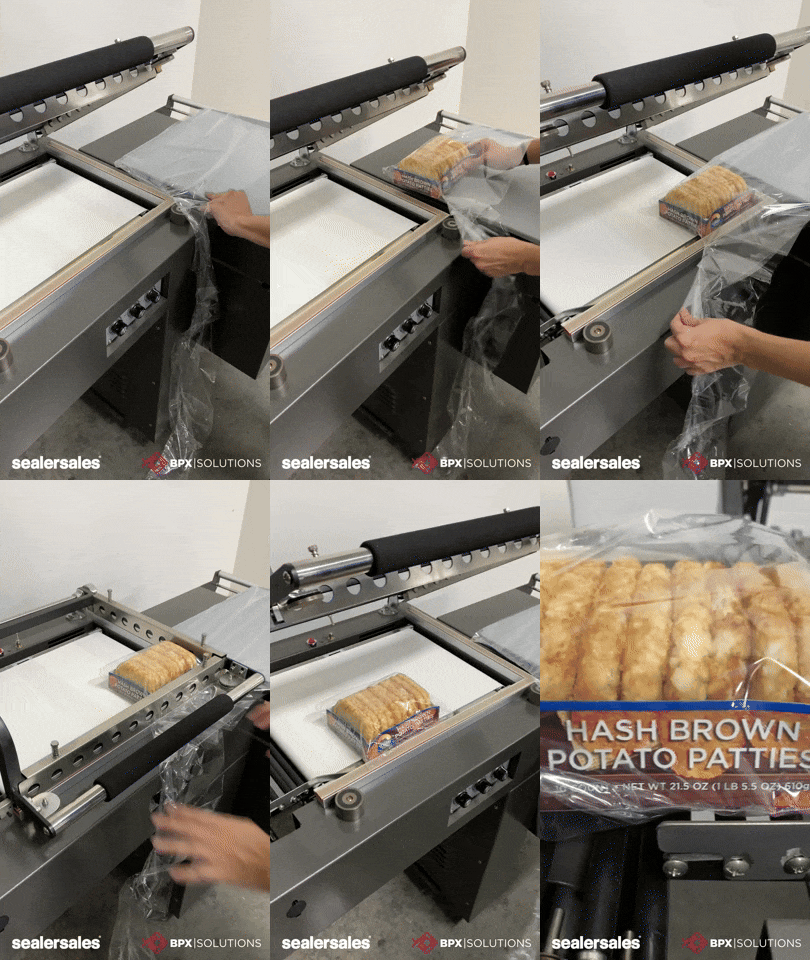
  • Sealer – An I-Bar or L-Bar sealer to cut and seal the film
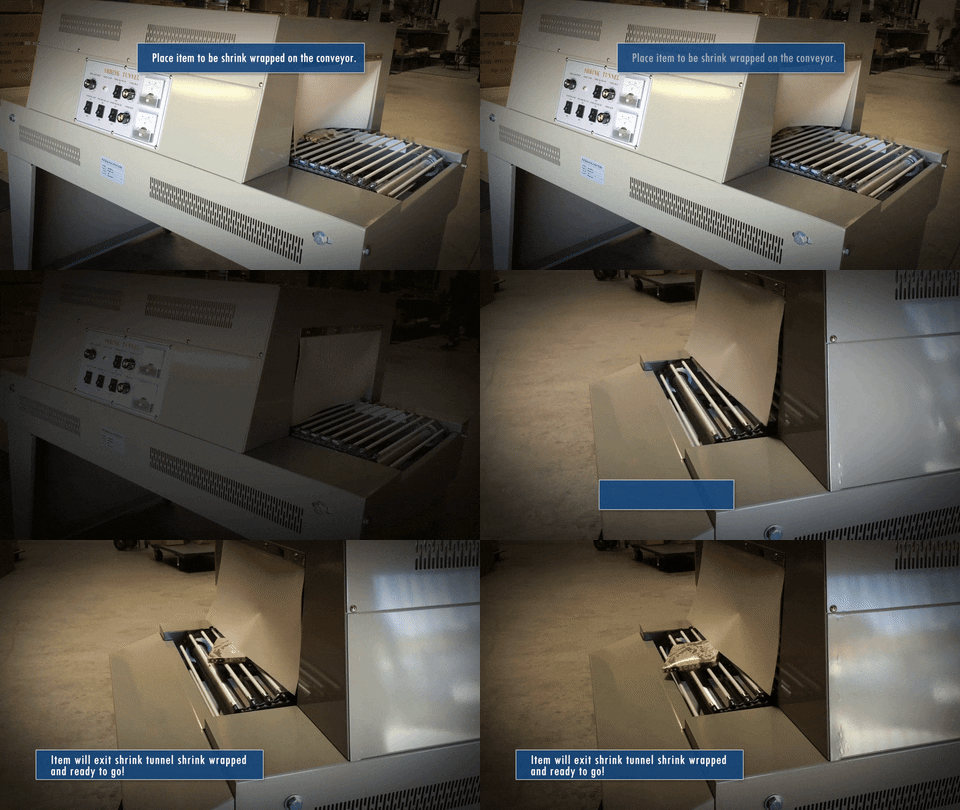
  • Tunnel or Heat Gun – Shrink tunnel or heat gun to apply heat and shrink the film snugly around the product

A simple yet effective process provides a professional, protective finish for a wide range of products.

Entry Level Shrink Wrapping
Each of the three components are sold separately and can seal 2-8 packages per minute.  Insert product between folds of the film and using the sealer seal the film and shrink the film using a shrink tunnel.

Combo Shrink Wrapping Equipment
Our combo shrink wrapping equipment combine the sealing and shrinking process into one standalone unit.  With speeds of up to 15 packages per minute, workflow will be efficient and flawless.

Shrink Film
Our centerfold (CF) shrink film is folded in half lengthwise.  To determine the required film width:

  • Add the width and height of your product and add 5-10% for a cushion
  • Choose the smaller of the two measurements

Engineered for Excellence

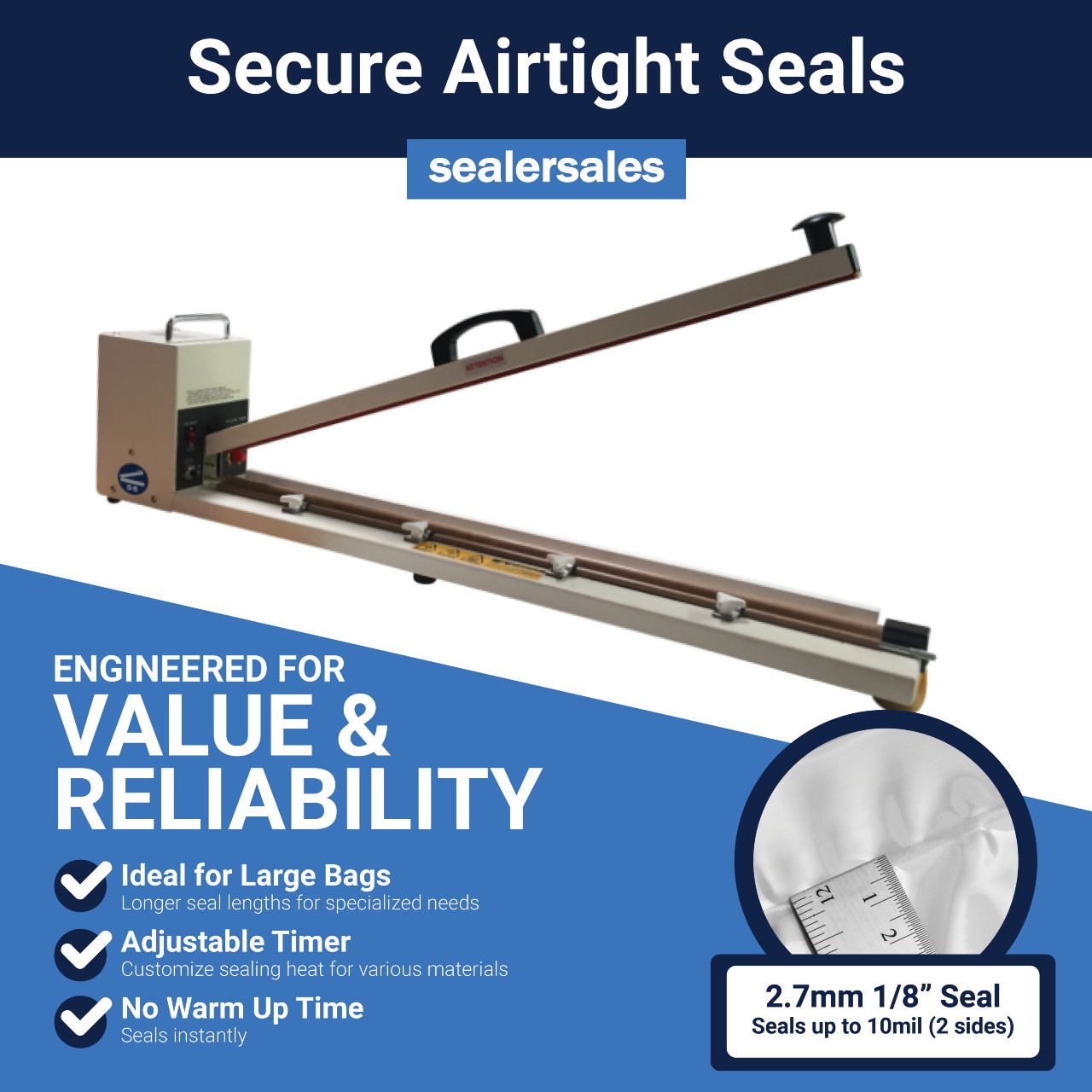
Extend Your Reach with W-Series Long Hand Sealers

If your sealing projects require extra reach and flexibility, Sealer Sales has the solution with our
W-Series Long Hand Sealers.  Designed to handle larger bags and materials, these reliable sealers are perfect for a variety of applications, from industrial to retail packaging.  And the best part?  All models are in stock and ready to ship!

Reach out to our amazing customer service team or your authorized Sealer Sales distributor for more information.

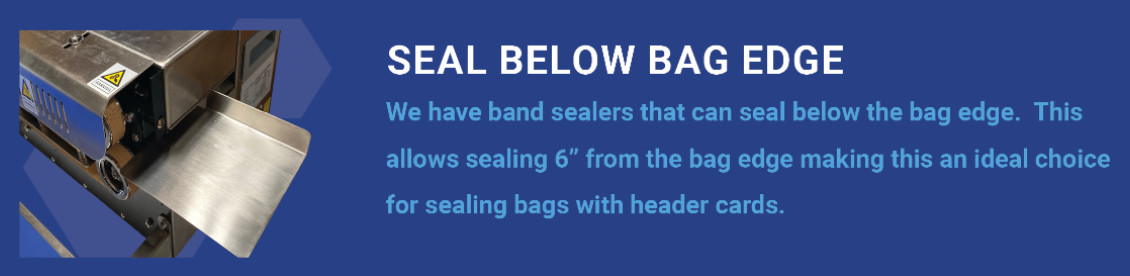
Sealer Sales Custom Band Sealers

Sealers Sales takes prides in offering the broadest range of band sealers, from our popular tabletop CBS-880 to our heavy-duty HL-M1120LD models.

Did you also know that we offer numerous features to meet your unique applications needs?

Reach out to our amazing customer service team or your authorized Sealer Sales distributor for more information.

Highlighting our Vacuum Bags

Vacuum packaging is a technique that removes air from a package before sealing it, commonly used in the food, healthcare or industrial market.  Once the air is removed, it is essential to have a robust oxygen barrier (OTR) and seal integrity to maintain a low oxygen concentration inside the bag.  This is where our vacuum bags come in.

We carry a wide variety of vacuum bags to suit your application:

  • From our smallest bag at 4″ x 6″ to 24″ x 36″
  • Various thicknesses:  3mil, 4mil, 5mil
  • Different colors such as clear/gold or clear/black
  • Custom sizes, material types and options available

Without vacuum bags, if you pull a vacuum with a poly bag, the poly bag will allow oxygen back in the bag puffing up the bag and defeating the purpose of the vacuum sealer.  In order for the bag to say vacuumed, the bag must be a vacuum bag.

Don’t forget to check out our vacuum sealers and reach out to your authorized Sealer Sales distributor for the best options tailed to your vacuum sealing needs


Download our Quick Guide to Vacuum Sealers here.