Category Archives: Uncategorized

Impulse Sealer Troubleshooting 101

Hand, foot, and auto impulse sealers all work in a similar way — so when something goes wrong, the fix usually comes down to one of a handful of parts: the heating element, PTFE cover and adhesive, microswitch, mounting springs, or timer. This guide walks through the most common causes in order, so you can troubleshoot your sealer before assuming you need a replacement.

Q: I bought a sealer and now it isn’t working. Can you help me?

A: Of course! We’re the sealer experts, and most issues turn out to be simple fixes. All you need is a screwdriver, an unplugged machine, and a few minutes to run through our quick troubleshooting checklist below.


Before You Start

  • Always unplug the unit before opening it up
  • Have a screwdriver handy — most hand and impulse sealers open with just a few screws
  • Work through the checks below in order; they cover the most common causes first

The 4 Point Sealer Checklist
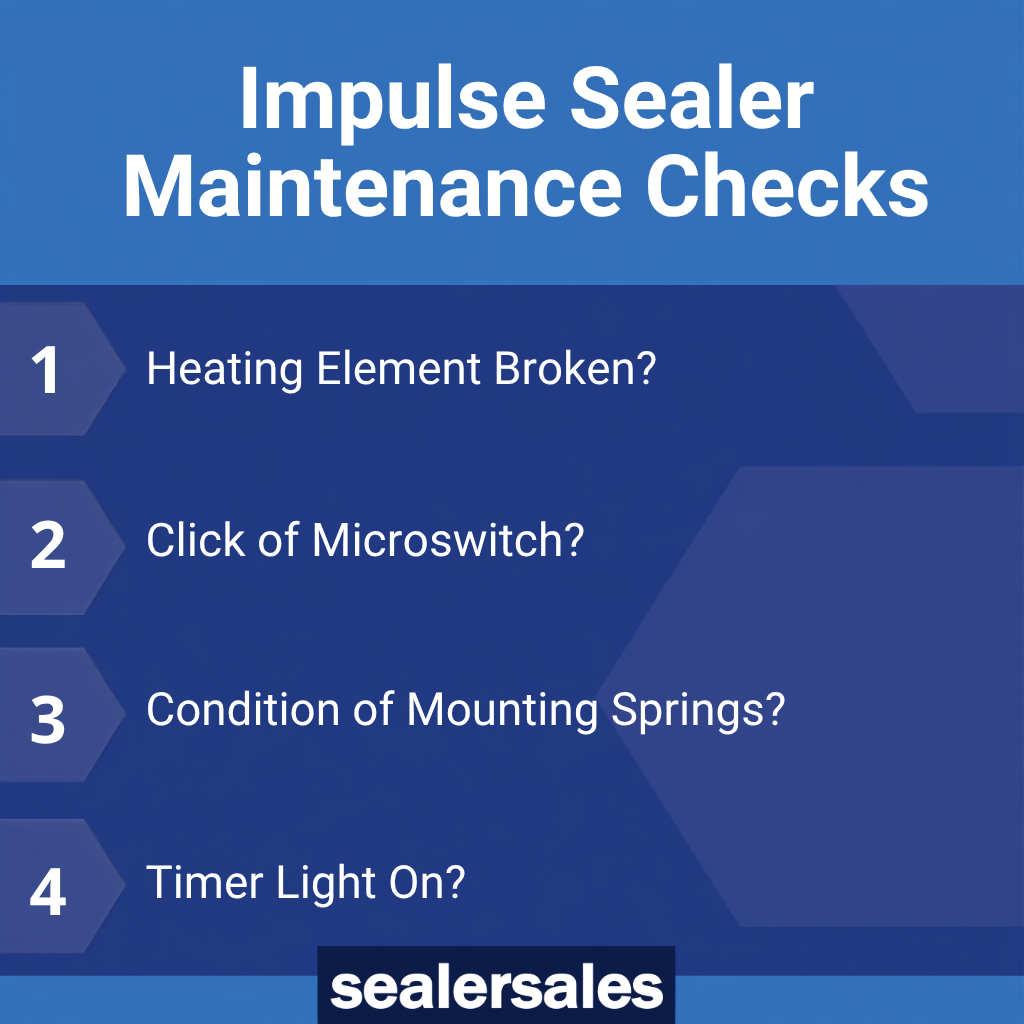
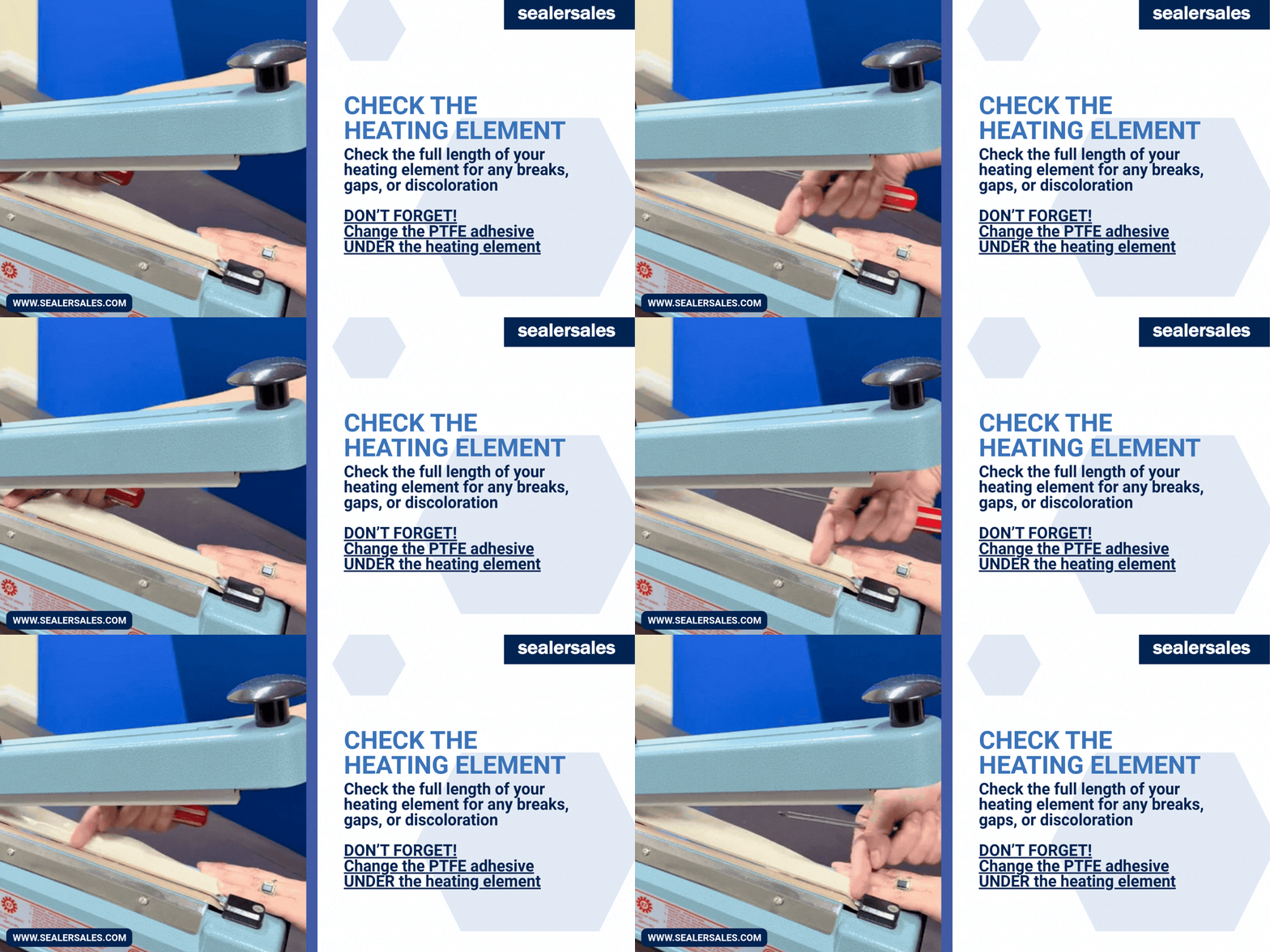
1. Is the heating element or wire broken?
This is the wire (flat or round) that heats up to seal or cut the bag/film. Remove the PTFE cover and check that the wire isn’t discolored, bent, or broken, and that it runs fully across the sealer.

Whenever you replace the element, always replace the PTFE adhesive underneath it too — this thin adhesive-backed strip is the barrier between the metal heating element and the sealer’s metal body. If it burns through, the element can arc against the body, which breaks the element again and can damage the timer as well. Replacement kits include the element, PTFE cover, and PTFE adhesive together so you’re never missing a piece. We carry replacement kits for all our sealers.
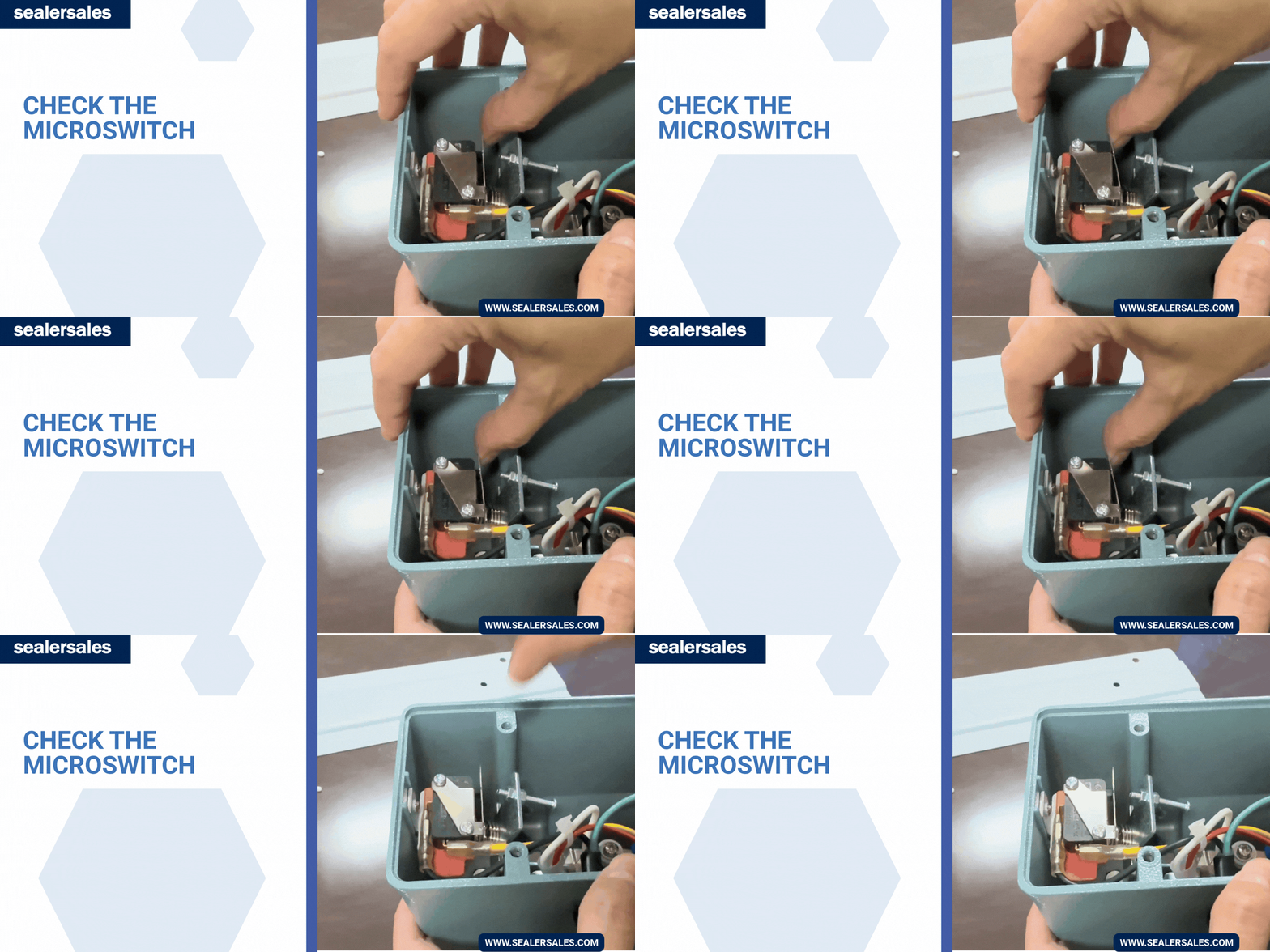
2. Do you hear the microswitch “click”?
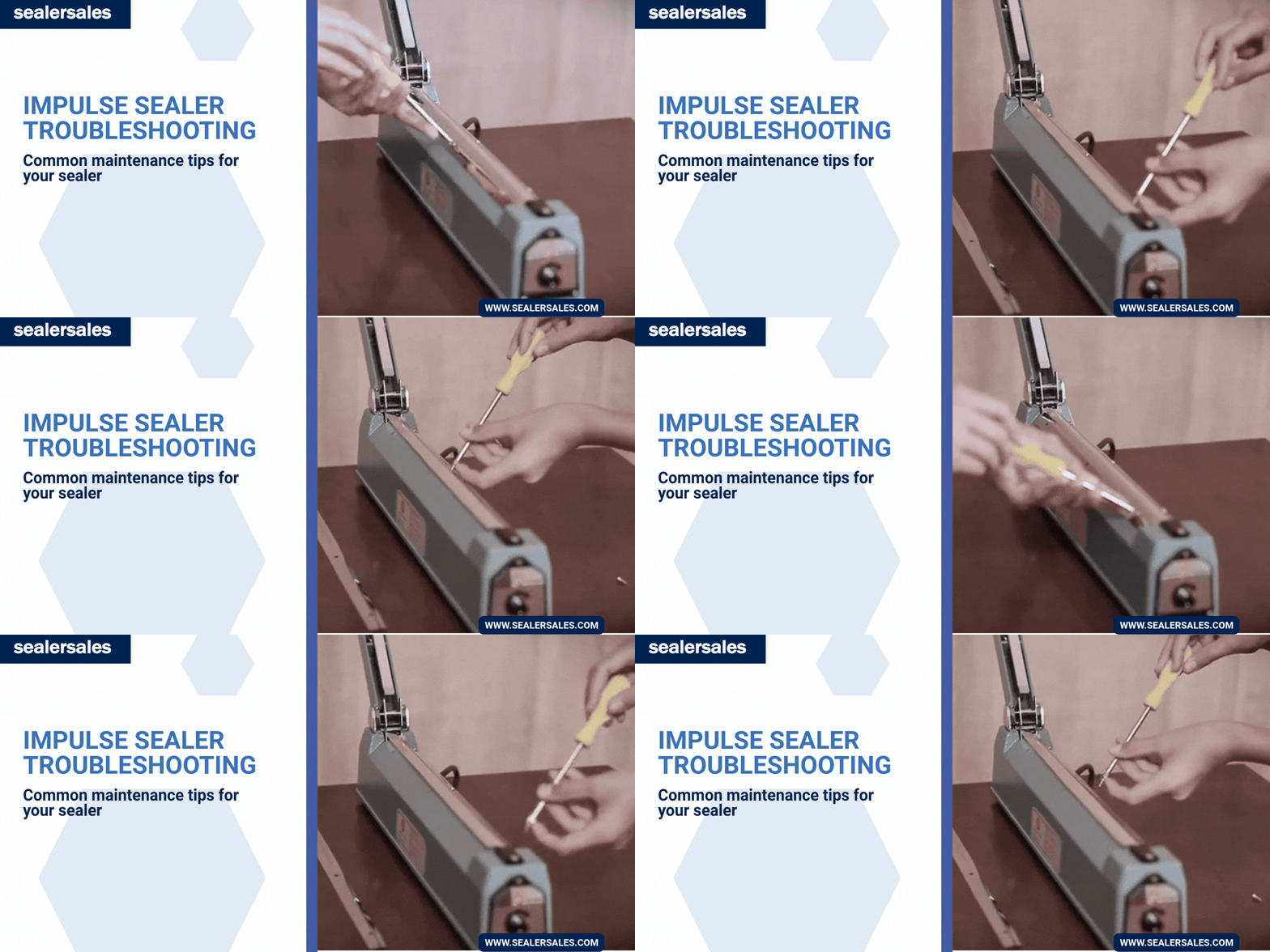
The microswitch is what allows electricity to reach the heating element. It can shift out of alignment during shipping and need a simple adjustment, and the fix depends on your sealer type
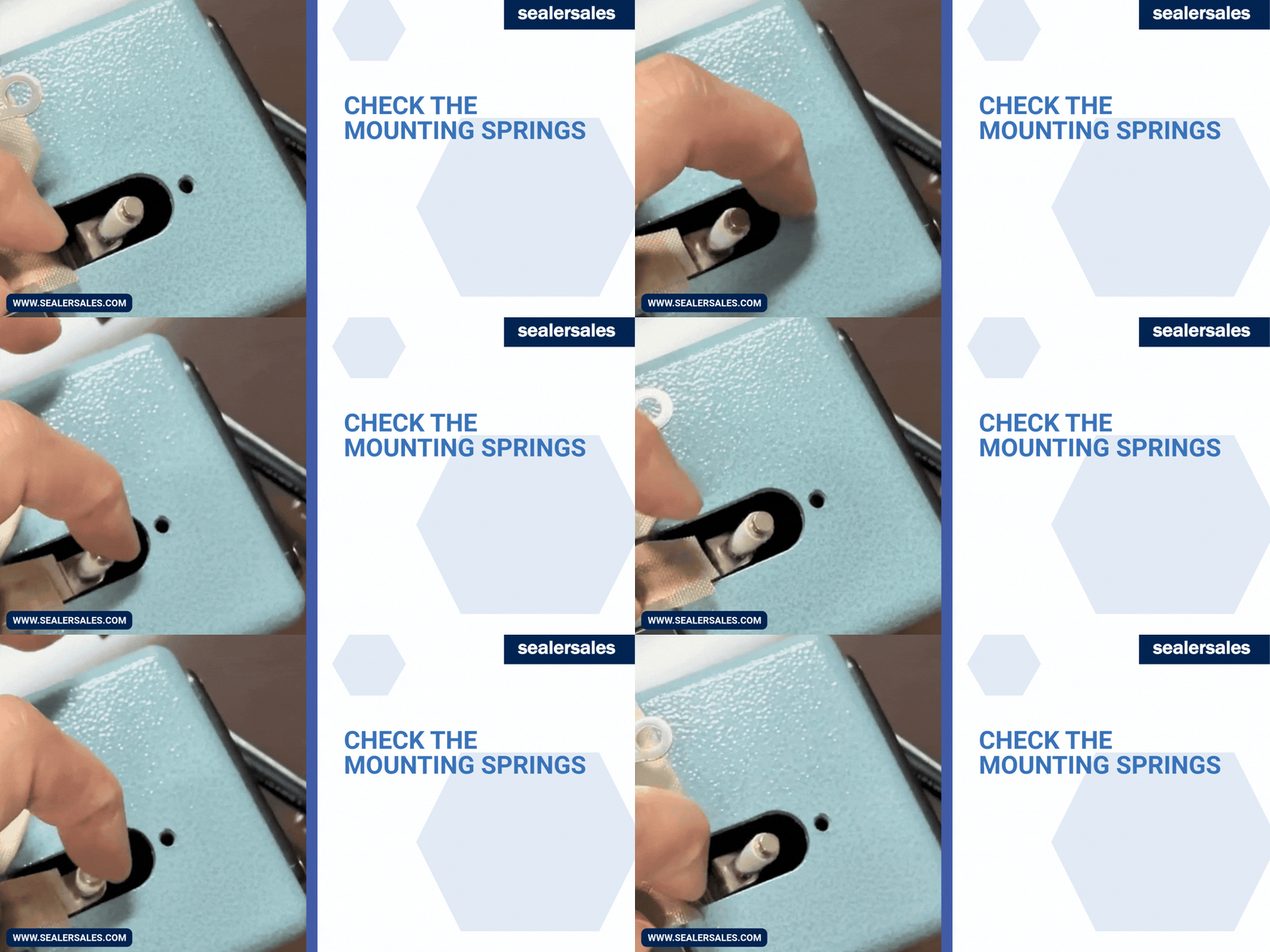
3. Are the mounting springs intact?
The springs hold the heating element in place on both ends. Make sure they’re not broken, rusted, or worn — a damaged spring will prevent the element from conducting heat properly. Replace if needed. Mounting springs can be purchased here.

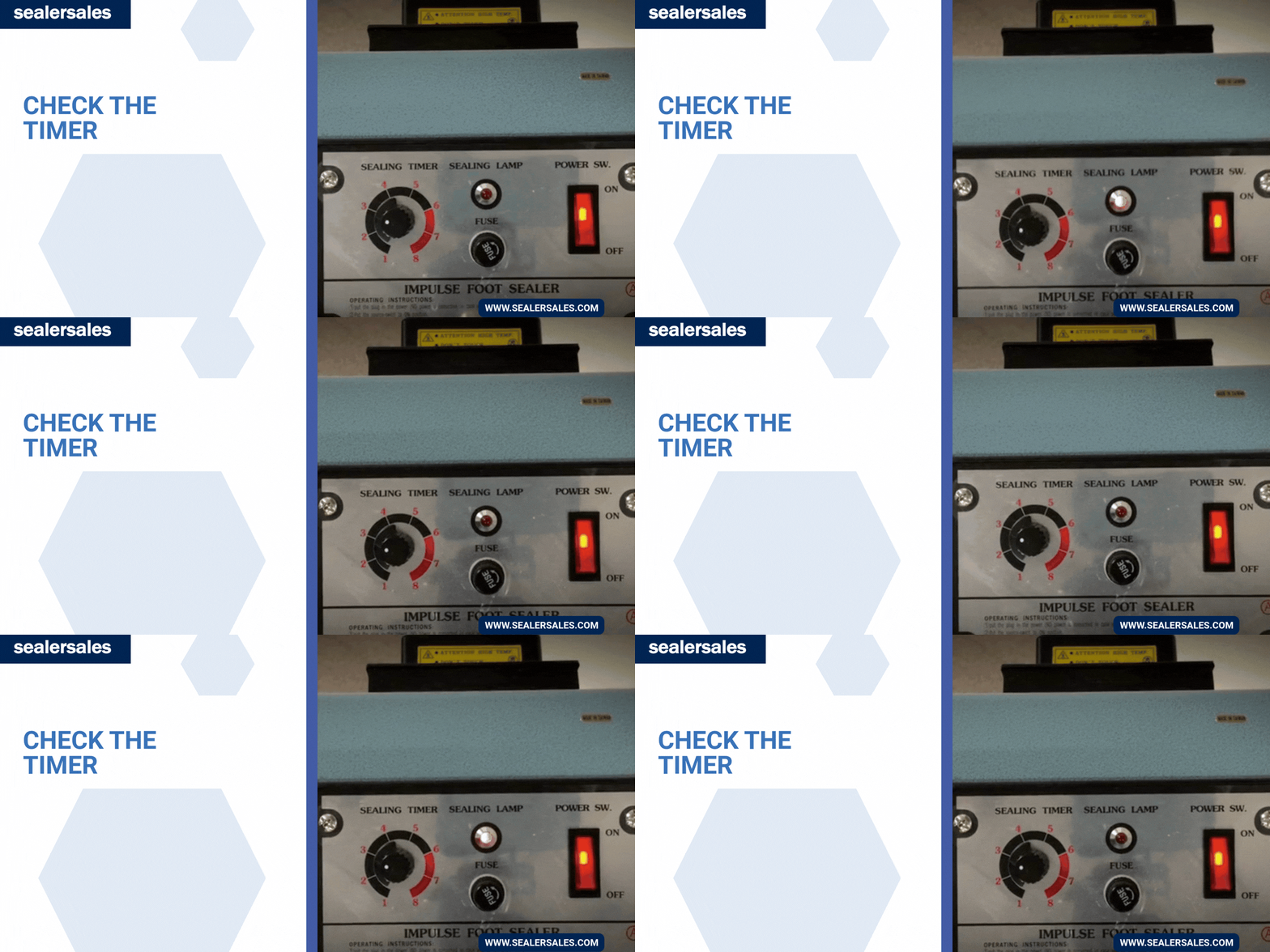
4. Does the timer light come on?
The timer light should come on briefly when the seal bar meets the base. If it doesn’t, check for loose wiring — if wiring looks fine, the timer likely needs replacing. Replacement timers can be purchased here.

Watch: How to Change Your Replacement Kit

We recommend changing your element, PTFE adhesive, and PTFE cover on a regular basis as part of routine maintenance — not just when something breaks.


Features to Check for Weak or Inconsistent Seals

Check below

  • Silicone rubber worn or missing — the milky-white rubber strip on the sealer arm needs to be intact for a clean seal
  • PTFE strip worn out — residue buildup on the PTFE can prevent a high quality seal; wipe down with silicone spray on a cooled (not hot) unit, never spray directly onto the machine
  • Timer settings incorrect — try different timer settings
  • Congeal (Dwell) time too low — congeal means to cool under pressure, and skipping it is one of the most common causes of a seal that looks fine but opens easily. Hold the sealing arm down for a couple of seconds after the timer light goes off before releasing. This lets the seal set and cool properly, and also extends the life of your heating element. For auto impulse sealers, set the congeal (cooling) time to at least 2x the heat setting. Skipping or shortening this to boost packages-per-minute is the leading cause of premature element and PC board failure

In most cases, a sealer that stops working isn’t broken for good — it just needs one part checked or replaced. Running through the heating element, PTFE adhesive, microswitch, mounting springs, and timer in order will catch the vast majority of issues, and regular maintenance (fresh PTFE, proper congeal time) goes a long way toward preventing them in the first place.

We carry a wide variety of spare parts that will help you repair your sealer.

Reach out to our customer service team or your authorized Sealer Sales distributor for more information — and if you’re not sure what’s wrong, send us a photo or model number at contact@sealersales.com and we’ll help you figure it out.

Bag Sealing 101

Bag Sealing 101
Whether you’re packing coffee, snacks, industrial parts or medical supplies, a bag sealer (heat sealer) is one of the most essential tools in the packaging world.  But with so many models and options, it can be confusing to figure out which one is right for your application.   This quick guide will help you find the right sealer.

Keep products fresh and protected

Seal bags in seconds – ideal for small and large volumes

Creates clean uniform seals to elevate your packaging

Reduces waste and extend shelf life

What is a Bag Sealer?
 A bag sealer is a machine that uses heat and pressure to close and seal flexible packaging – like poly bags, pouches and or laminated films. The heating element warms up (either instantly or continuously) and seals the inner layer of the bag When pressed together under pressure, the two sides fuse After a short cooling period, the seal is secure, airtight and tamper-evident

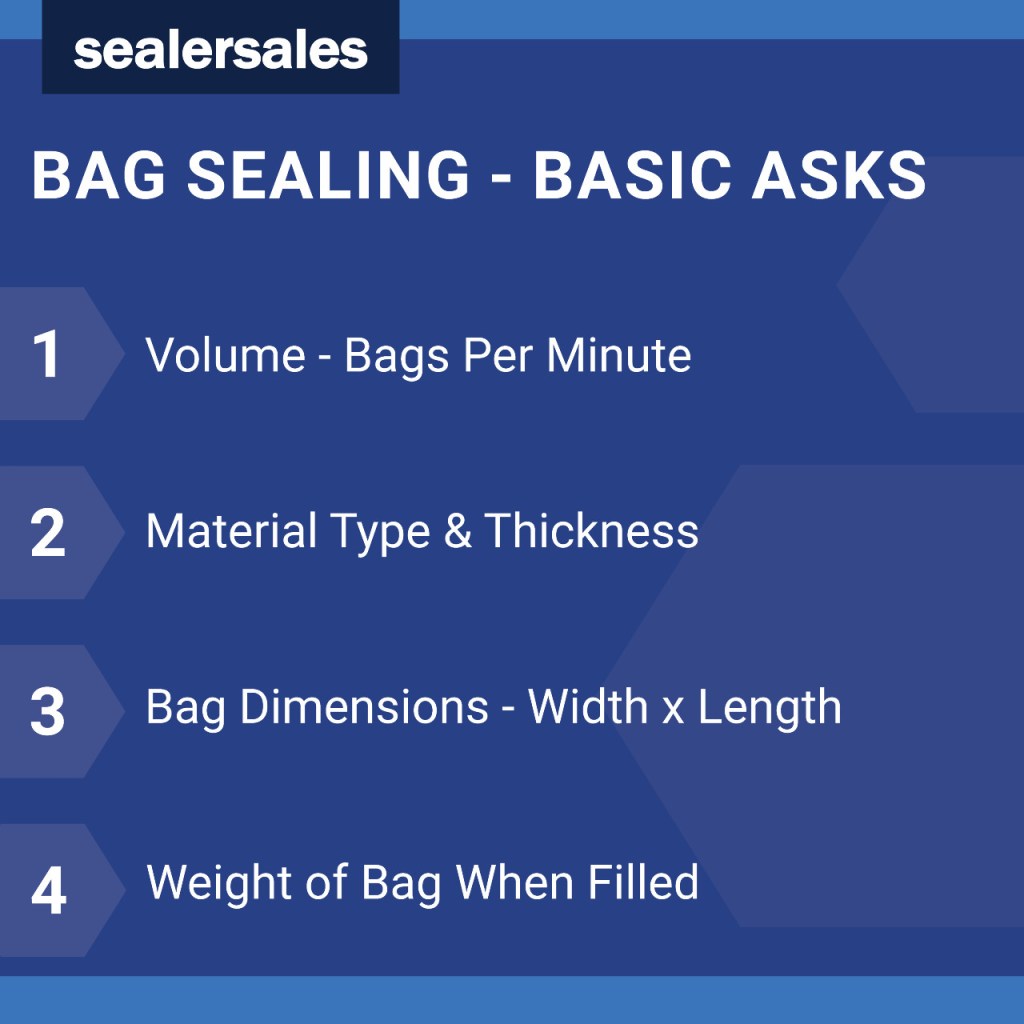
When choosing a bag sealer, focus on matching your packaging material, material size and desired production quantity. These questions are important to answer to make sure the correct sealer is chosen.

Types of Sealers 
There are two types of sealers – impulse vs. direct heat

  • Impulse – Ideal for standard poly bags (PE, PP)
  • Direct Heat / Constant Heat Sealer – Ideal for thicker harder to seal materials like foil and coated bags

Impulse Heat Sealers
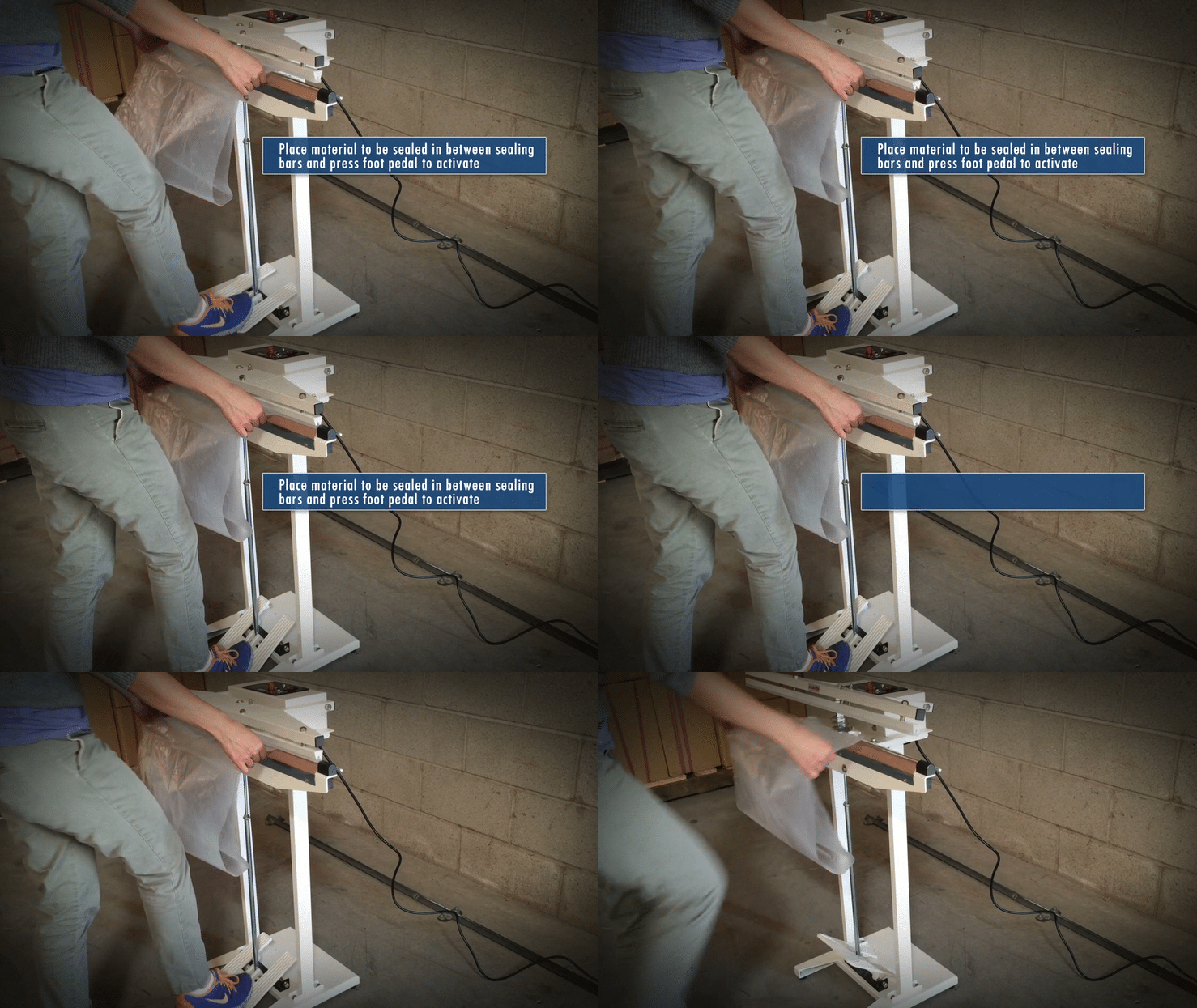
Impulse sealers are ideal for every day sealing.  The units require no warm-up time. Impulse sealers only use power when the microswitch is activated Ideal for every day poly bags (polyethylene or polypropylene) Seal widths:  Round (Shrink Wrapping), 2mm, 5mm, 10mm Require regular maintenance

Direct Heat Sealers
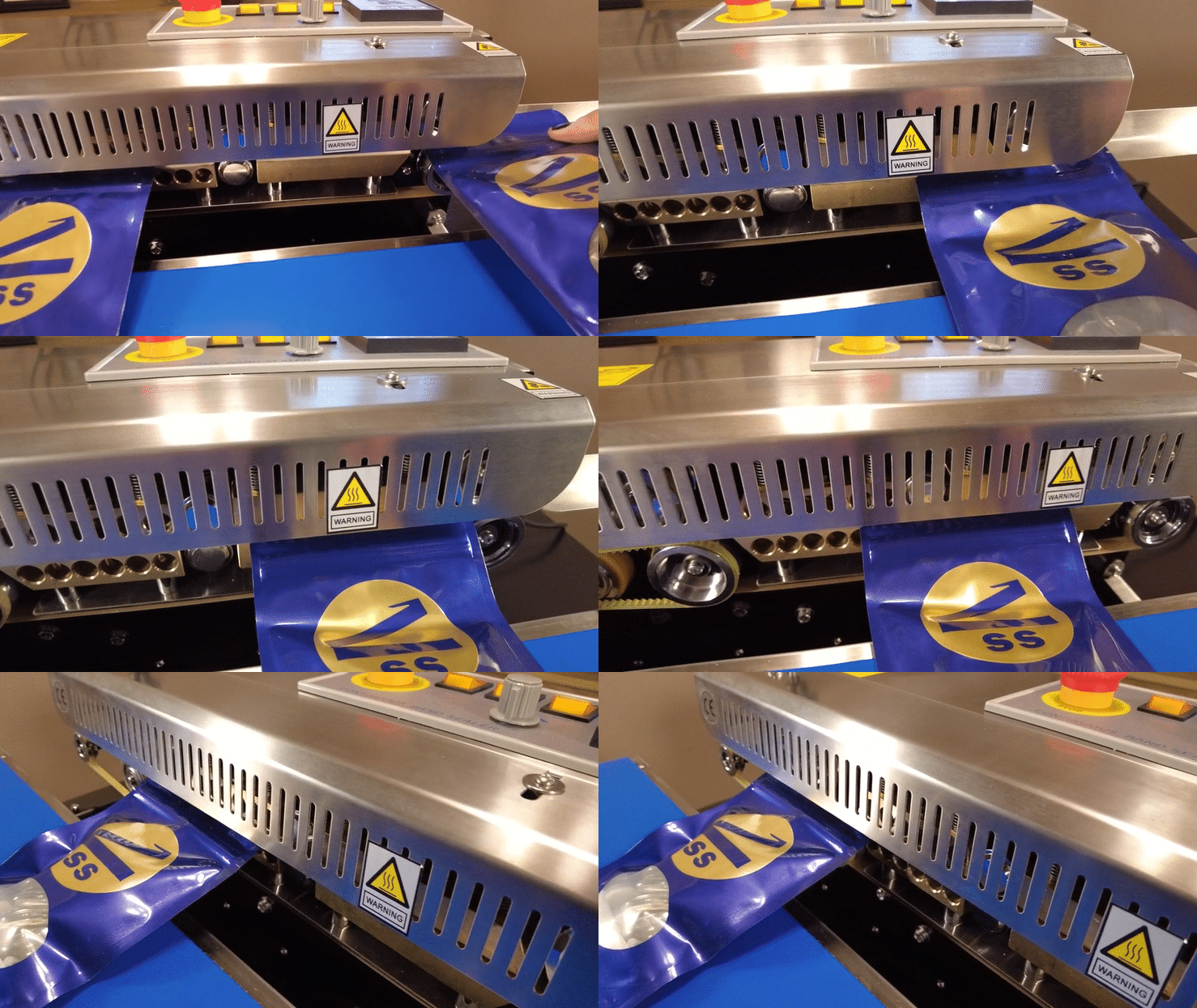
Direct heat sealers maintain constant heat in both jaws. Uses power as long as machine is turned on Better heat penetration for thicker materials such as gusseted bags Seal widths:  8mm, 10mm, 15mm, 20mm CANNOT seal polyethylene 

Type of Impulse Heat Sealers

Type of Direct Heat Sealers

Choosing the right sealers isn’t just about the machine – it’s about matching your packaging needs with the right sealing method.  The right sealer saves time and ensures a strong secure package every time.

Shrink Wrapping 101

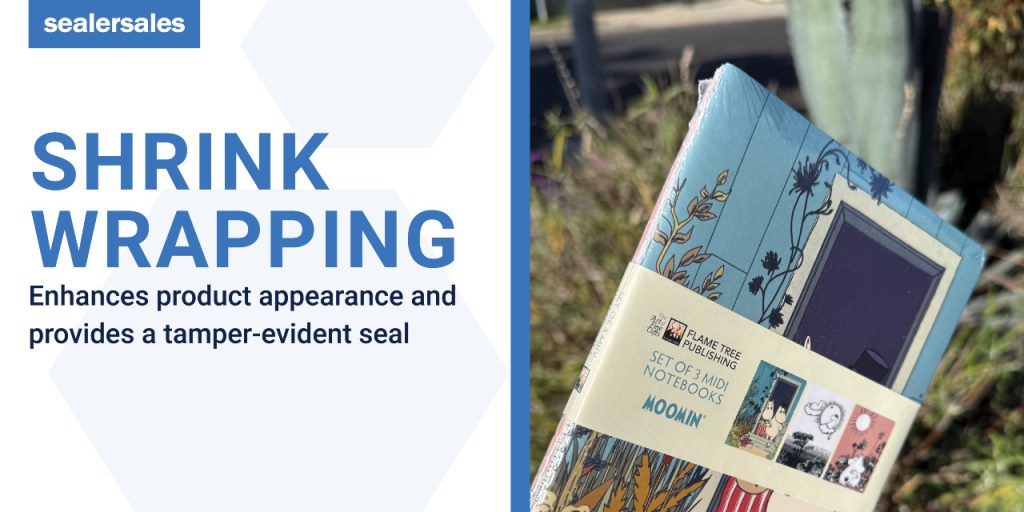
Shrink wrapping enhances product appearance, keeps items clean and provides a tamper evident seal – .  It’s also commonly used to bundle cartons, cans and other goods for bulk sales.

What is Shrink Wrapping?
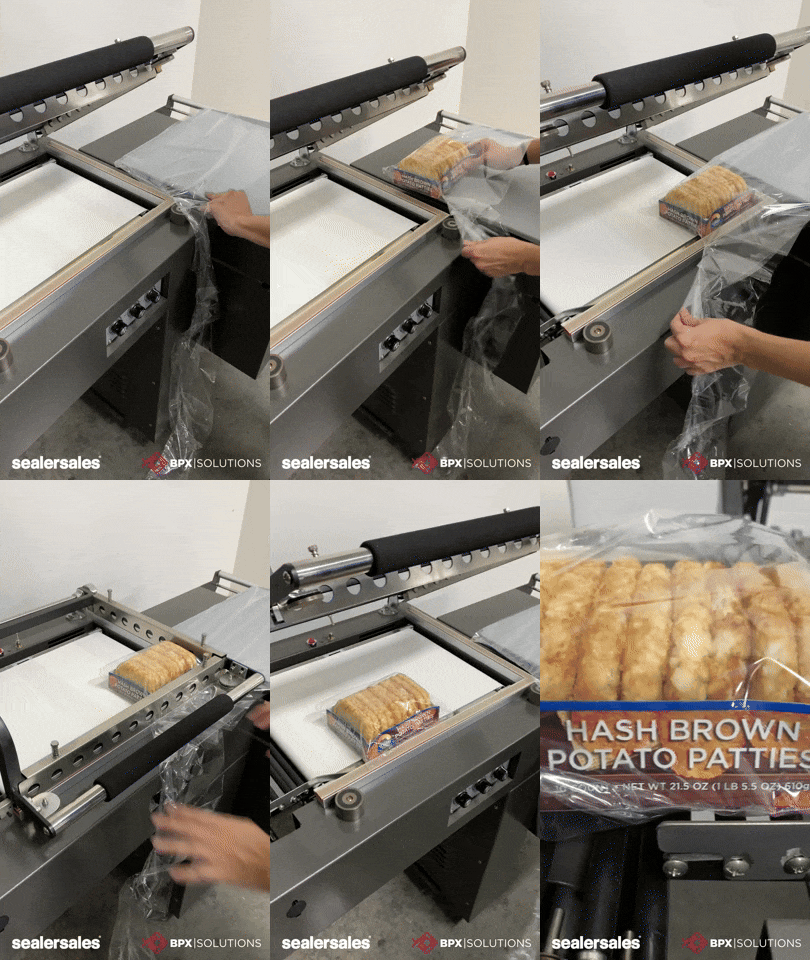
Shrink wrapping is an efficient and cost-effective method widely used in industries like food, beverage and pharmaceuticals.  The process involves wrapping a product in shrink film and applying heat – shrink tunnel or heat gun – to create a tight secure fit. 
How to Shrink Wrap a Product?
Shrink wrapping requires three essential components

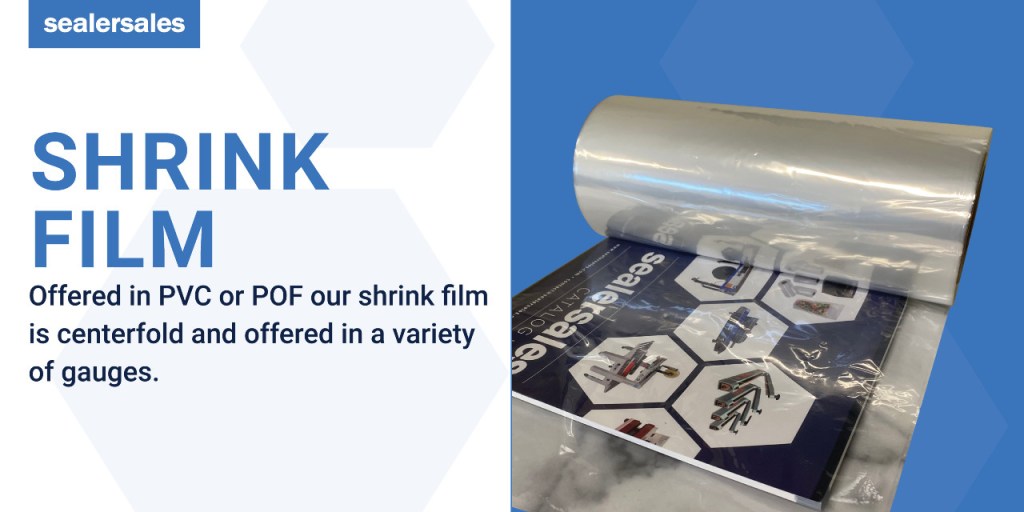
  • Shrink Film – PVC or POF film to wrap around your product
  • Sealer – An I-Bar or L-Bar sealer to cut and seal the film
  • Tunnel or Heat Gun – Shrink tunnel or heat gun to apply heat and shrink the film snugly around the product

A simple yet effective process provides a professional, protective finish for a wide range of products.

Entry Level Shrink Wrapping
Each of the three components are sold separately and can seal 2-8 packages per minute.  Insert product between folds of the film and using the sealer seal the film and shrink the film using a shrink tunnel.

Combo Shrink Wrapping Equipment
Our combo shrink wrapping equipment combine the sealing and shrinking process into one standalone unit.  With speeds of up to 15 packages per minute, workflow will be efficient and flawless.

Shrink Film
Our centerfold (CF) shrink film is folded in half lengthwise.  To determine the required film width:

  • Add the width and height of your product and add 5-10% for a cushion
  • Choose the smaller of the two measurements

Engineered for Excellence

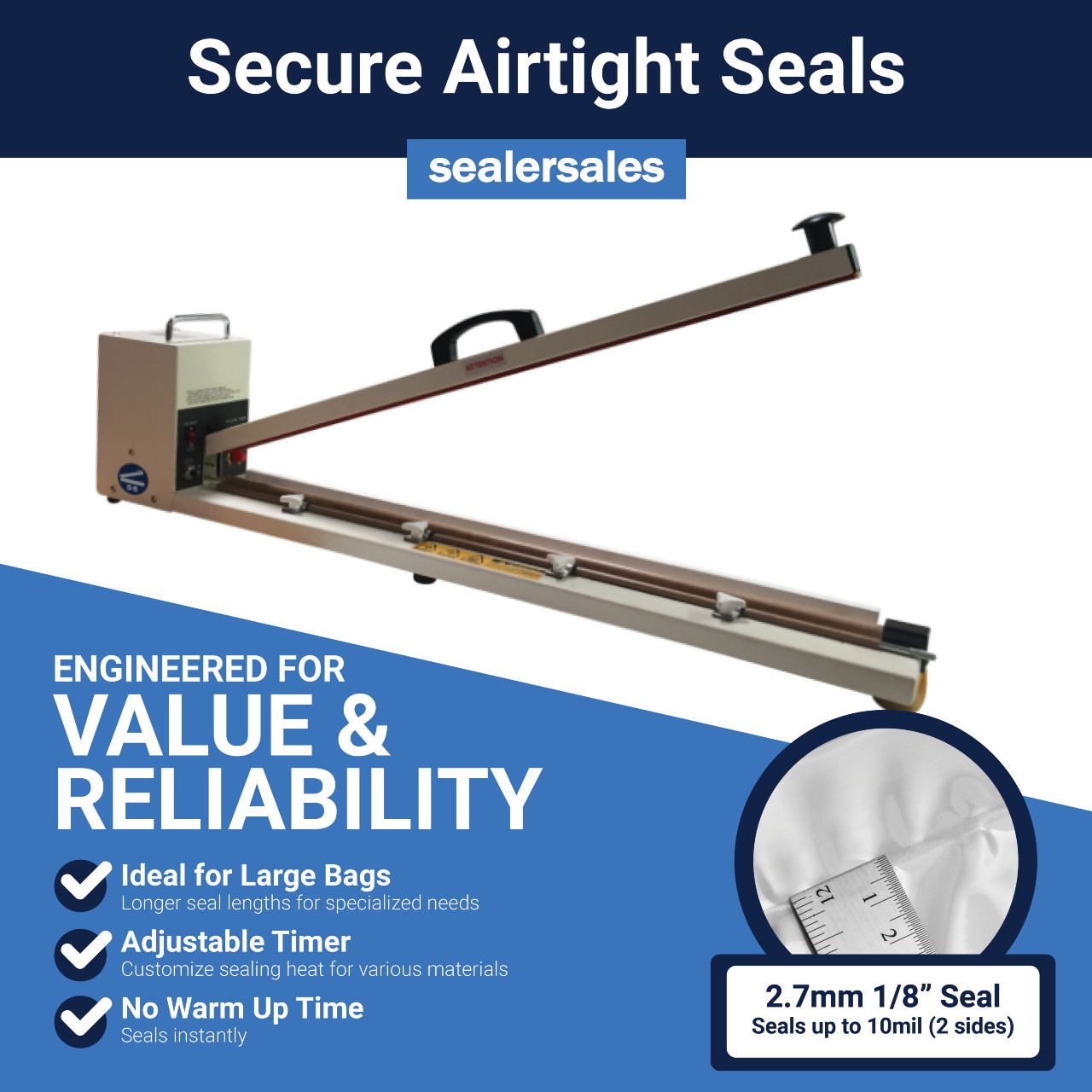
Extend Your Reach with W-Series Long Hand Sealers

If your sealing projects require extra reach and flexibility, Sealer Sales has the solution with our
W-Series Long Hand Sealers.  Designed to handle larger bags and materials, these reliable sealers are perfect for a variety of applications, from industrial to retail packaging.  And the best part?  All models are in stock and ready to ship!

Reach out to our amazing customer service team or your authorized Sealer Sales distributor for more information.

Highlighting our Vacuum Bags

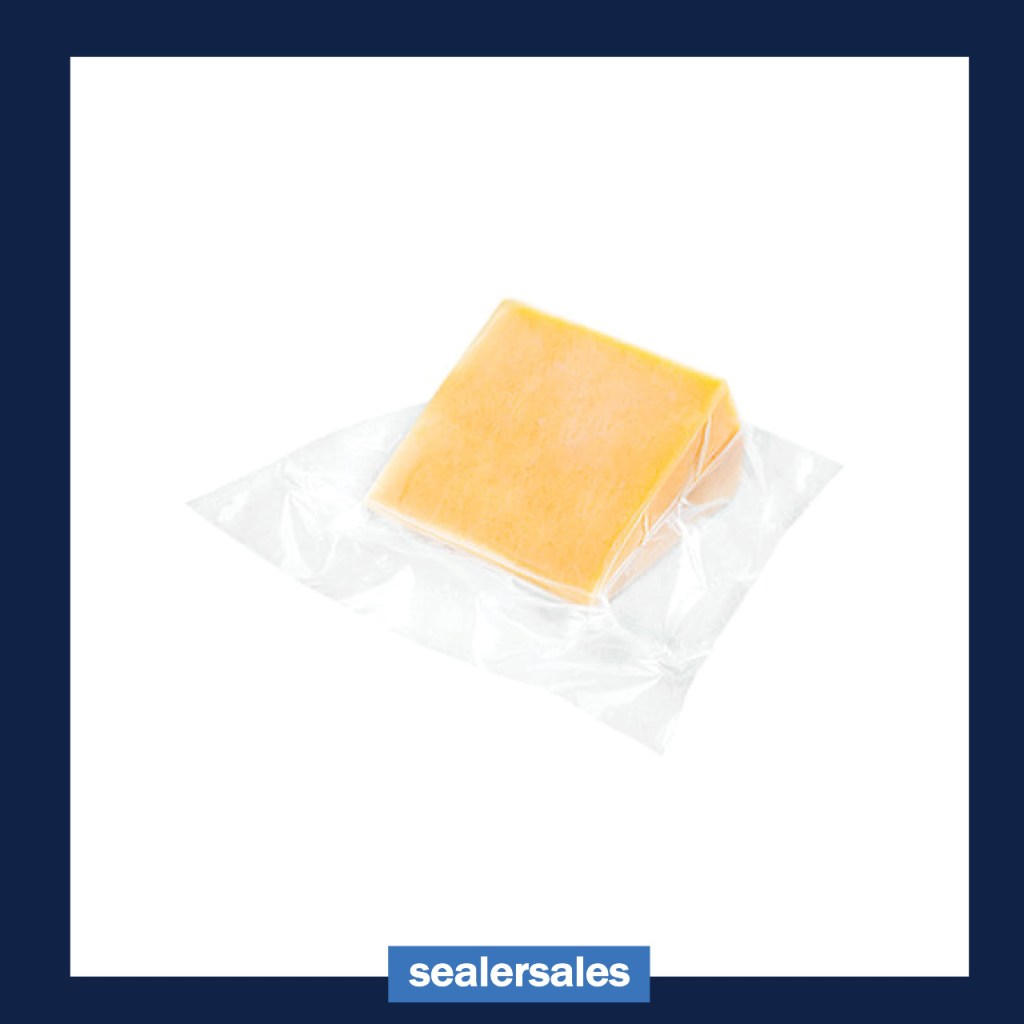
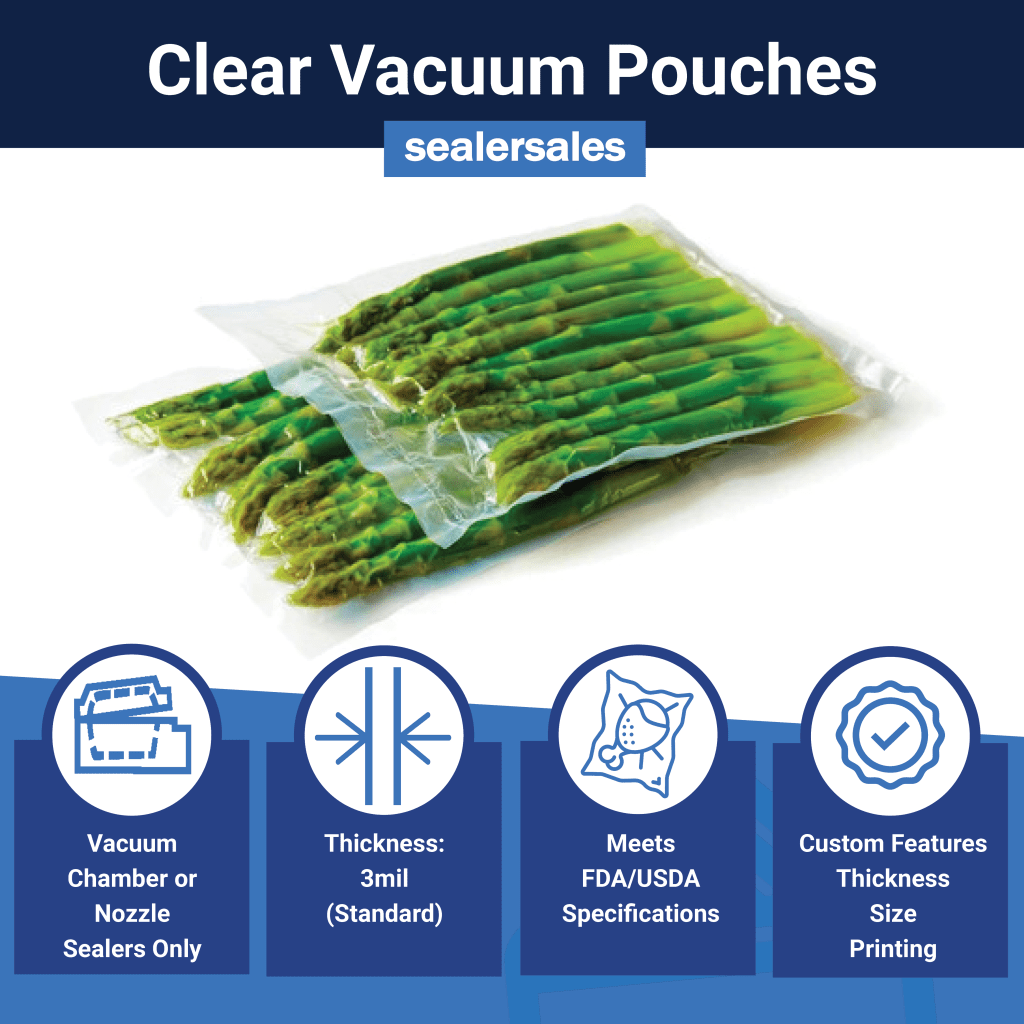
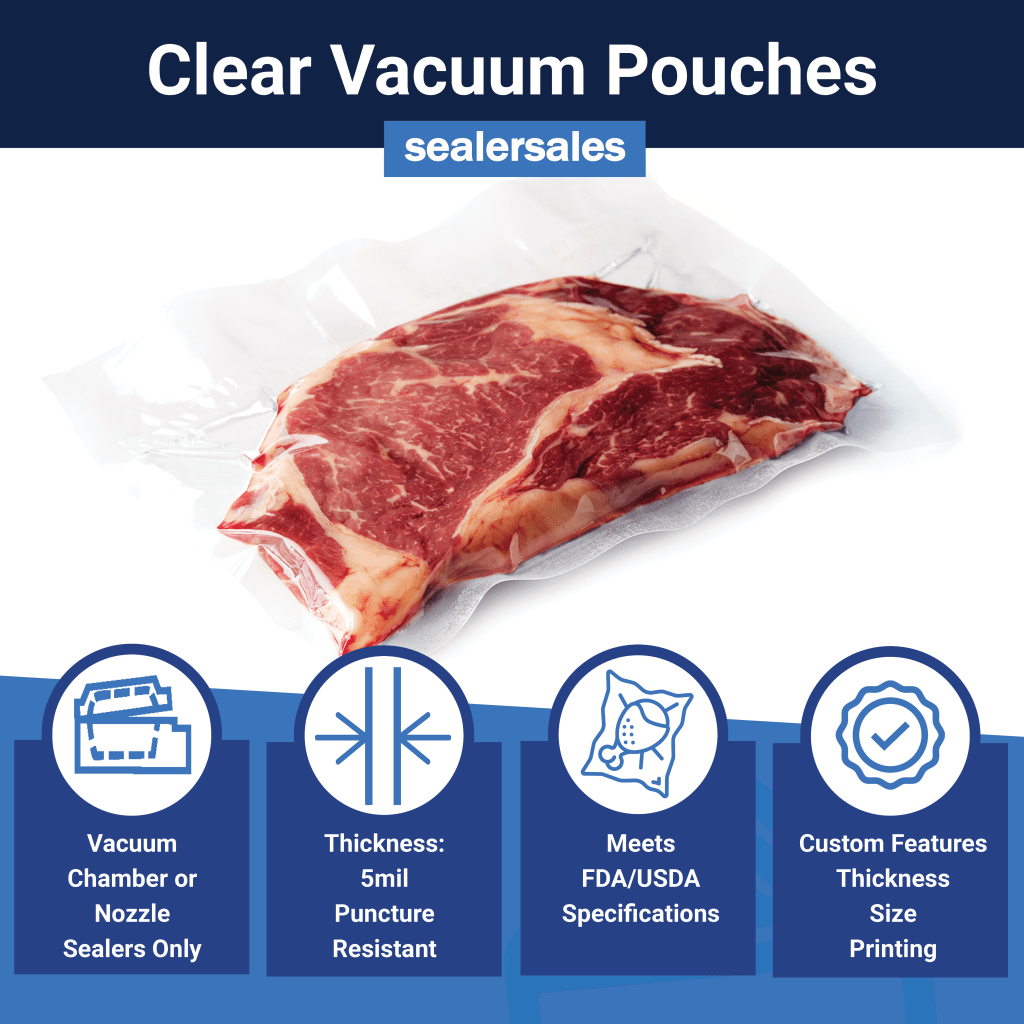
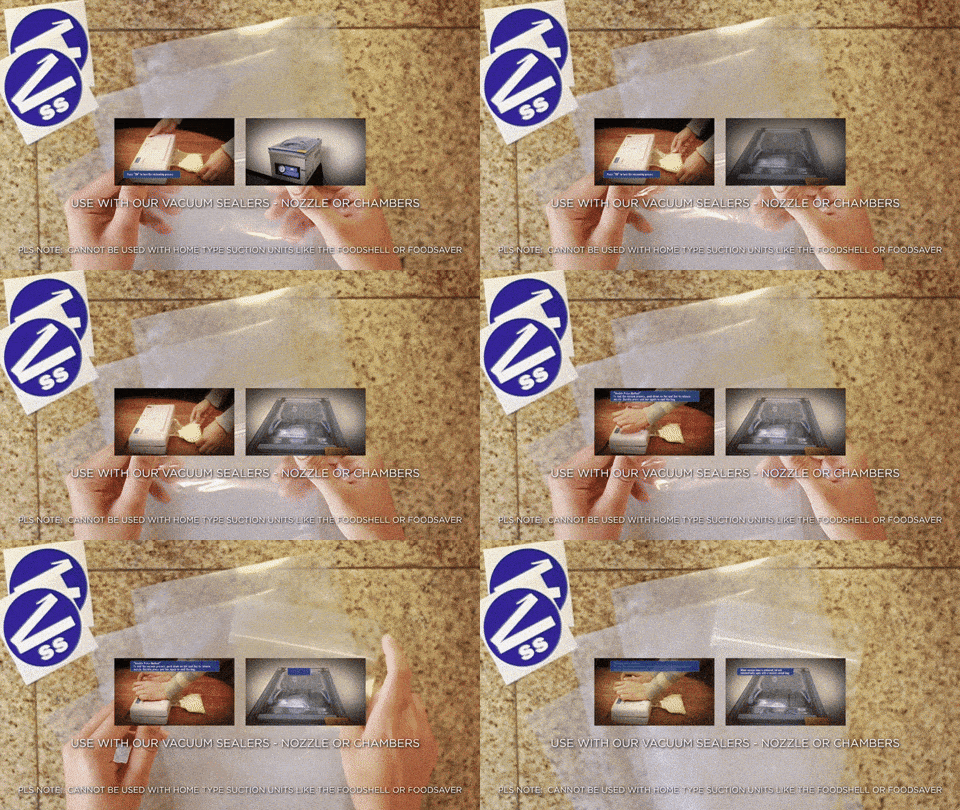
Vacuum packaging is a technique that removes air from a package before sealing it, commonly used in the food, healthcare or industrial market.  Once the air is removed, it is essential to have a robust oxygen barrier (OTR) and seal integrity to maintain a low oxygen concentration inside the bag.  This is where our vacuum bags come in.

We carry a wide variety of vacuum bags to suit your application:

  • From our smallest bag at 4″ x 6″ to 24″ x 36″
  • Various thicknesses:  3mil, 4mil, 5mil
  • Different colors such as clear/gold or clear/black
  • Custom sizes, material types and options available

Without vacuum bags, if you pull a vacuum with a poly bag, the poly bag will allow oxygen back in the bag puffing up the bag and defeating the purpose of the vacuum sealer.  In order for the bag to say vacuumed, the bag must be a vacuum bag.

Don’t forget to check out our vacuum sealers and reach out to your authorized Sealer Sales distributor for the best options tailed to your vacuum sealing needs


Download our Quick Guide to Vacuum Sealers here.

Highlighting our Polyolefin Shrink Film

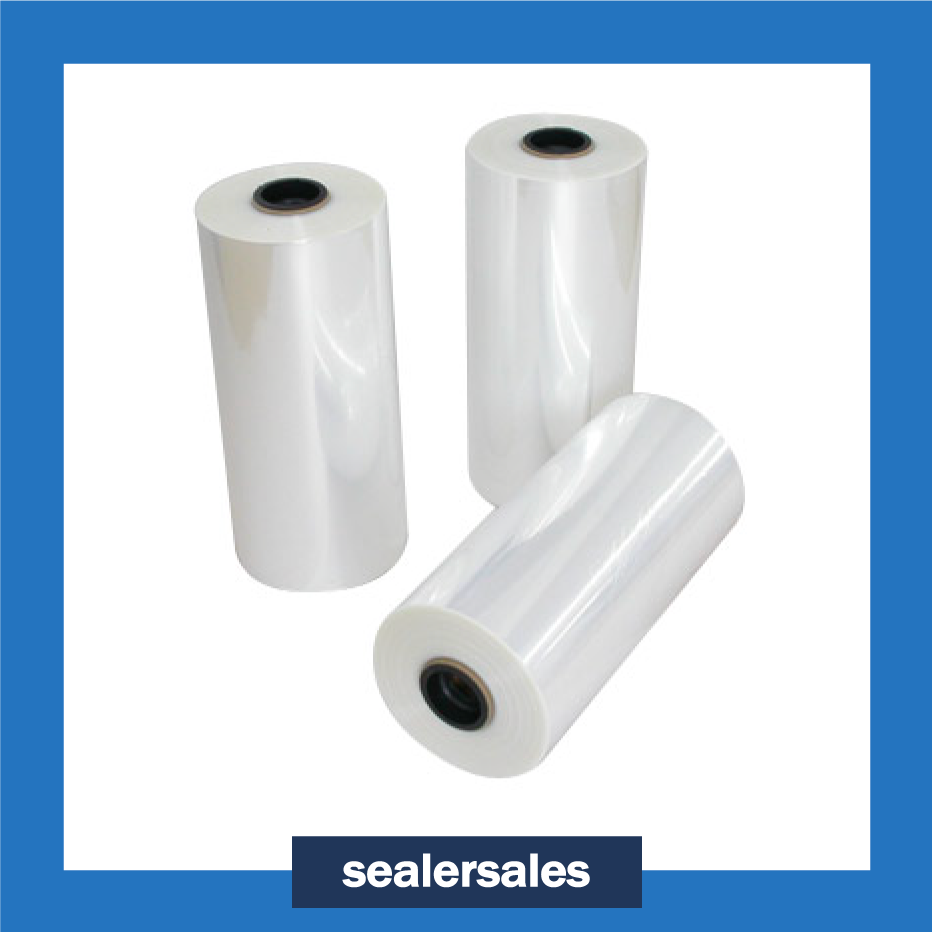
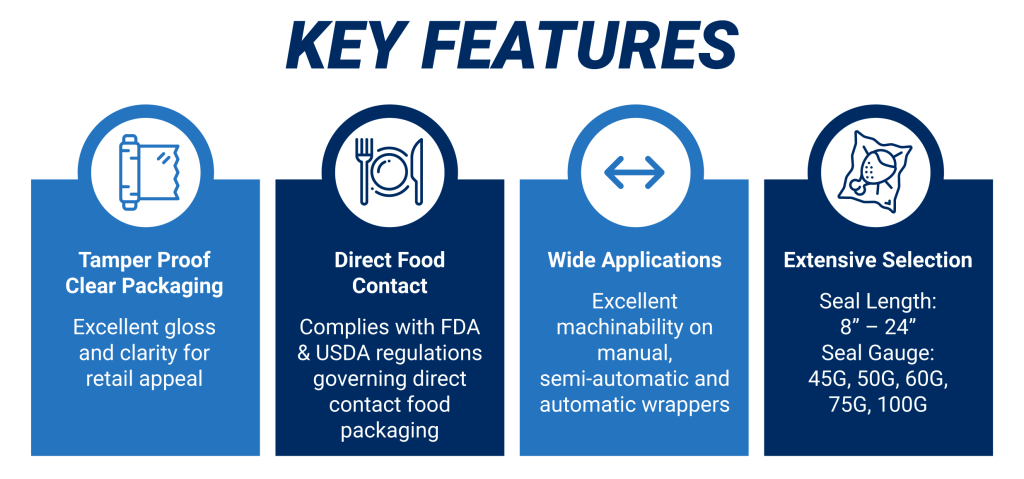
Polyolefin shrink film has become the preferred choice over PVC shrink film, thanks to its outstanding clarity and odorless composition. It is the top material for shrink wrapping due to its suitability for tamper-proof, clear packaging and safe direct contact with food, adhering to FDA and USDA regulations. We offer two types of shrink film: 201 and IR. For most shrink wrapping needs, the 201 film is an excellent choice, compatible with both manual and semi-automatic shrink wrapping equipment.

Remember that polyolefin shrink film is just one of the three components needed for effective shrink wrapping. Don’t forget to include a sealer to enclose your product and a heat source to activate the shrink process. Reach out to your authorized Sealer Sales distributor for the best options tailored to your shrink wrapping applications.

Why Shrink Wrap?
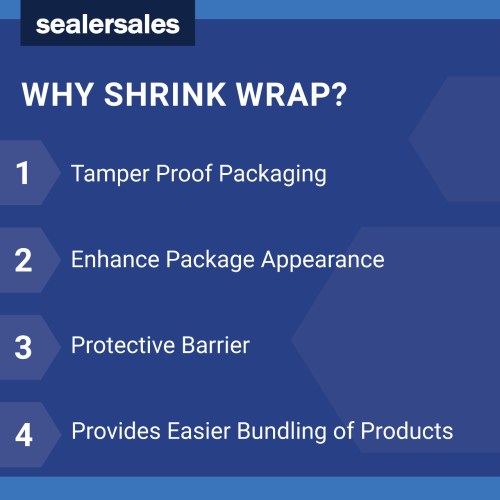
Shrink wrapping ensures product stability, cleanliness, and tamper-proofing, all of which contribute to the safety of consumption. It’s also used to overwrap products like cartons and cans for bulk sale.

What is Shrink Wrapping?
Shrink wrapping is a cost-effective packaging technology widely adopted across various industries, including food, beverages, and pharmaceuticals. It involves loosely wrapping a polymeric shrink film around the product and subjecting it to heat using a shrink tunnel, creating a snug fit. Shrink tunnels are heat chambers placed over a conveyor.

How Do You Shrink Wrap?
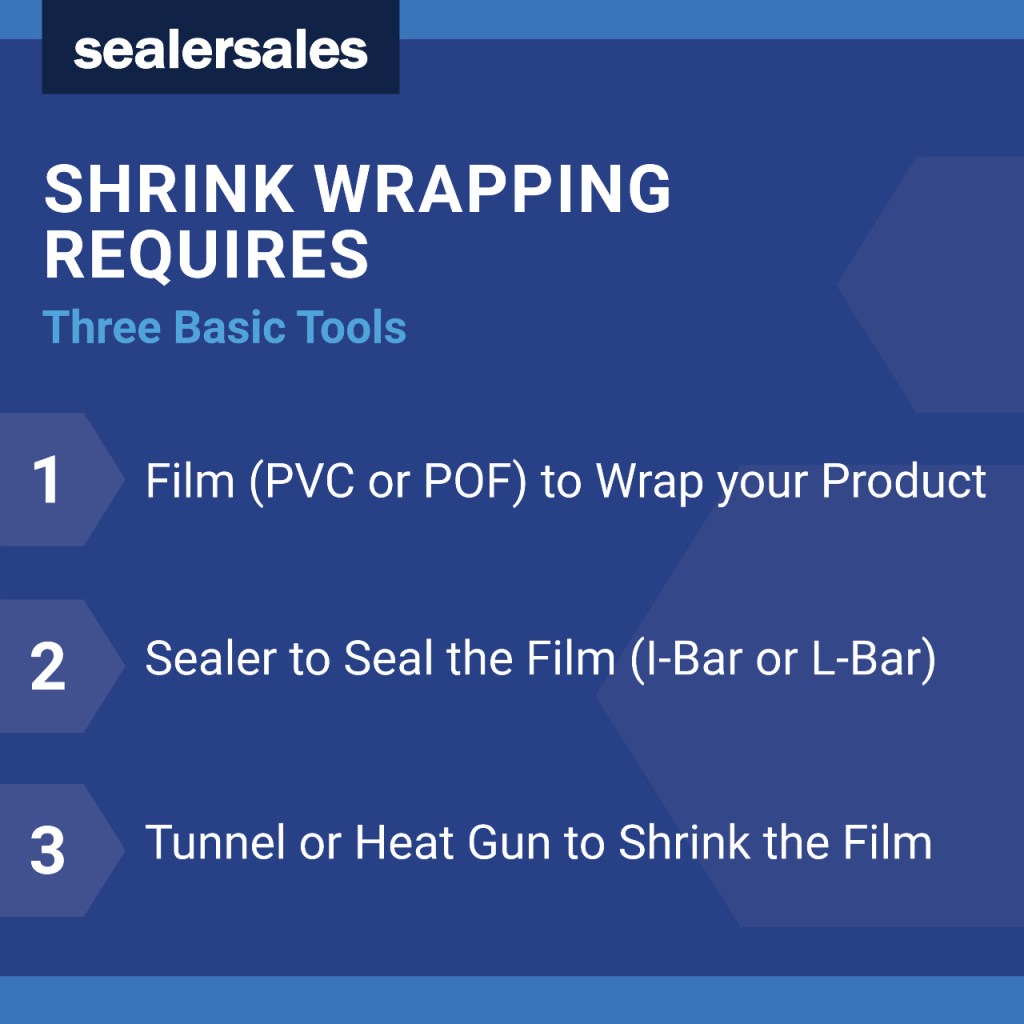
Shrink wrapping requires three basic tools:

  1. Film (PVC or POF) to wrap your product
  2. Sealer to seal the film, such as an I-Bar or L-Bar Sealer
  3. Tunnel or Heat Gun to shrink the film around your product

Selecting the Right Shrink Film:

What Type of Shrink Film Do I Need?
We stock two primary types of shrink film: the 201 and IR. In most cases, the 201 film is the ideal choice for your shrink wrapping needs, especially if you’re using manual or semi-automatic equipment.

What Size Do I Need?
Our centerfold (CF) shrink film is folded in half lengthwise. To determine the required film width:

  • Add the width and height of your product and add 5-10% for safety.
  • For shrink film (typically sold as centerfold film), choose the smaller of the two measurements.
  • If your desired size isn’t available, you can use a larger size, as shrink films can shrink by up to 40% in all directions. We offer shrink film widths ranging from 8” to 24”, ensuring you’ll find the right fit.

What Thickness Do I Need?
The gauge represents film thickness, and we offer shrink film in various gauges: 45, 50, 60, 75, and 100. Our 75G shrink film is the most popular and suitable for most applications, while thicker gauges are ideal for heavier products.

For further details and tips on shrink wrapping, check out our blog post here: Shrink Wrapping 101

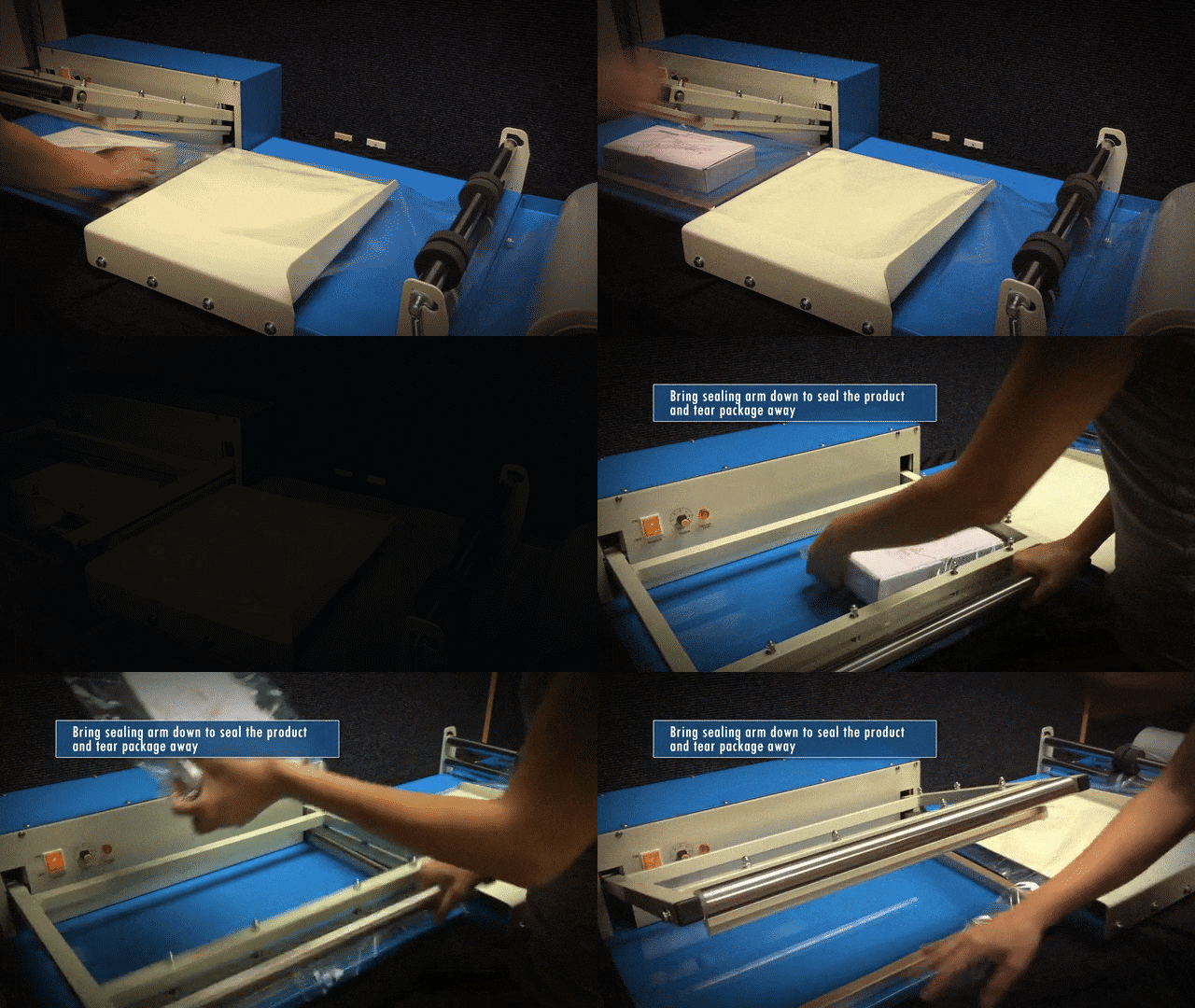
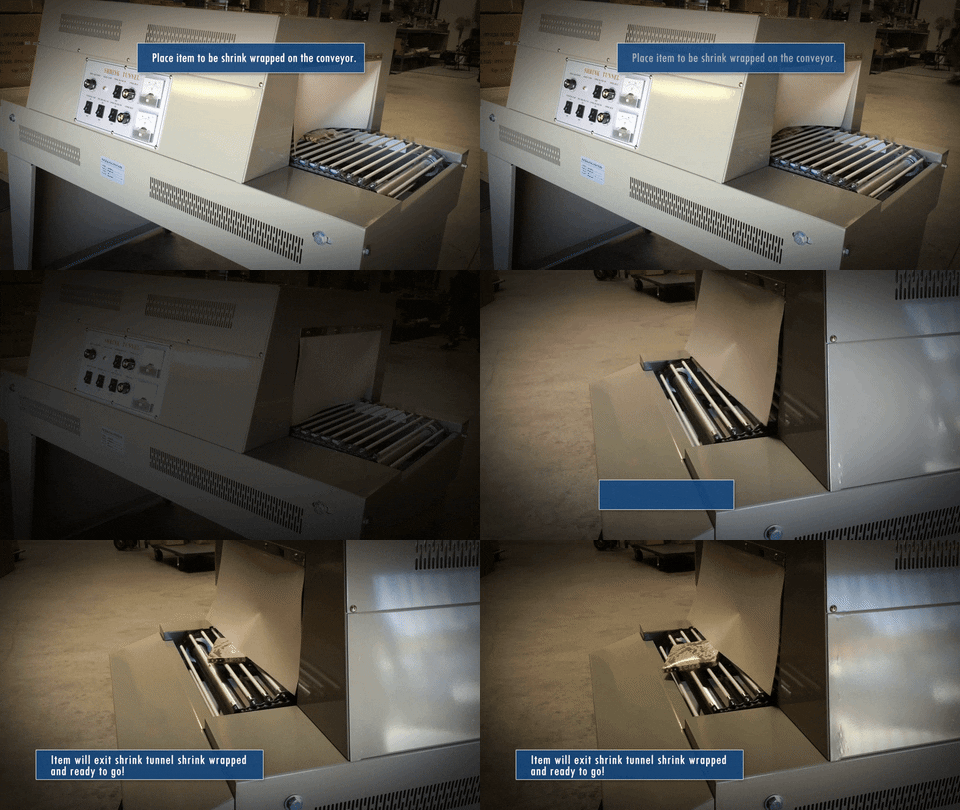
You can also watch a video demo of basic shrink wrapping in action on our YouTube channel: Watch Video

Image

Happy Thanksgiving

Happy 4th of July

Sealer Sales Holiday Schedule

Our offices will be closed Monday, July 3rd and Tuesday, July 4th in observance of Independence Day.  We will resume operations on Wednesday, July 5, 2023. 

Thank you for your continued loyalty.

Introducing our 2023 Catalog

Introducing our 2023 Catalog

We are thrilled to introduce our 2023 brochure showcasing our latest products and services. 

Our products are designed with your success in mind.  Our team has worked tirelessly to develop solutions that are tailored to your unique needs, and we believe our new brochure will help you make informed decisions about how our products can benefit you.

We would like to extend our sincere appreciation to your loyalty and trust.  We are committed to providing you with the best possible experience and look forward to continuing to serve you in years to come.  Thank you for your continued support.

Please reach out to us if you would like a physical copy of our catalog.